AI Disproved an 80-Year-Old Erdős Math Conjecture
In May 2026, an internal OpenAI model did something no AI system had done before: it disproved a famous, decades-old conjecture in a way mathematicians say would merit publication in a top journal even if a person had done it. Three months later, the same research effort added nine more solved problems. Here's what actually happened, based on OpenAI's own published proof and the outside mathematicians who checked it.
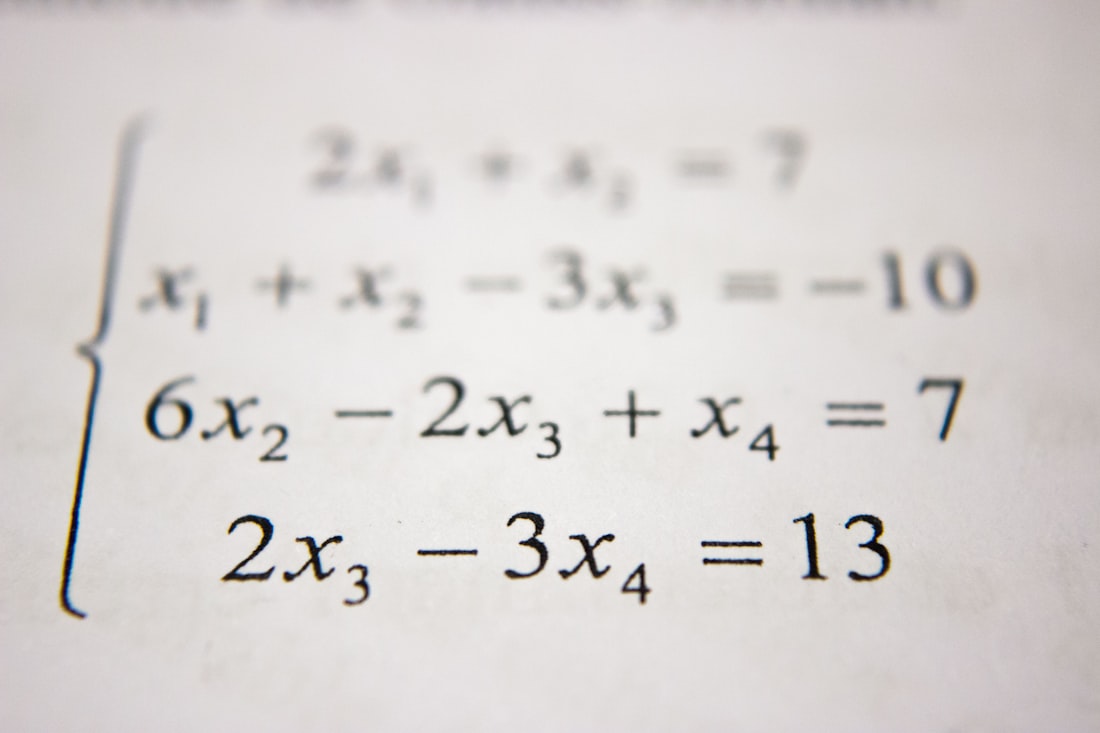
The unit distance problem asks a simple question with an answer that took 80 years and, eventually, a machine to find.
What the Unit Distance Problem Actually Asks
Scatter a group of points on a flat plane and ask a simple question: how many pairs of those points can sit exactly one unit apart? In 1946, the Hungarian mathematician Paul Erdős conjectured there was a hard ceiling on that count, and for eighty years, the field's best guess was that a simple square-grid arrangement of points came close to the maximum possible. On May 20, 2026, OpenAI announced that an internal, unreleased general-purpose reasoning model had disproved that belief — constructing an entirely different family of point arrangements that beats the ceiling mathematicians had assumed was close to optimal.
What makes this different from earlier, more modest AI math claims is how it was verified. OpenAI didn't just publish a company blog post and move on. It released the full proof, a companion paper co-written with outside mathematicians explaining and checking the argument, and public comments from named experts in the field — including Fields Medalist Timothy Gowers, who called it a milestone in AI mathematics.
How the Model Actually Found the Answer
The genuinely surprising part isn't just that the model found a better construction — it's where the idea came from. Instead of refining the familiar square-grid approach that mathematicians had spent decades trying to optimize, the model built its winning configuration using tools from algebraic number theory, a branch of math built for an entirely different set of problems, involving structures called class field towers. That's the kind of unexpected cross-disciplinary borrowing that even experienced mathematicians in the field said they hadn't considered trying.
Princeton mathematician Will Sawin later refined the result further, tightening the exact improvement OpenAI's model had found. That detail matters for judging the claim's credibility: the model's output wasn't a black box that mathematicians had to take on faith — it was concrete and specific enough that a human expert could verify it, then improve on it using ordinary mathematical reasoning, which is exactly what would happen with any legitimate new result in the field.
Was the Result Actually Verified, or Just Announced?
Verified, and by people with no incentive to inflate OpenAI's claims. The company gave a group of outside mathematicians early access to the proof before making it public, and asked them to independently check it rather than simply commenting on the announcement afterward. One of those mathematicians, Daniel Litt of the University of Toronto, wrote that it took him only a limited amount of time to convince himself the solution was correct, after which he spent a further weekend exploring possible refinements of his own — the kind of genuine mathematical engagement that doesn't happen with a result experts consider suspect.
This distinguishes the unit distance result from a lot of the noisier AI-and-math claims that circulated earlier in 2026, several of which turned out to be partial progress, benchmark artifacts, or secondhand social media reports rather than confirmed, published results. The unit distance disproof has an actual companion paper with named co-authors standing behind the mathematics, which is a meaningfully higher bar than a company blog post alone.
Ten Advances, Not Just One
On August 1, 2026, OpenAI published a second announcement: an internal version of its next major model, referred to as Astra, had produced results on ten distinct open problems spanning geometry, coding theory, group theory, operator algebras, quantum complexity, and extremal combinatorics, each of which had been open for at least a decade. The headline result among the ten was the first-ever explicit construction of a non-sofic group, resolving a question that had stood since the mathematician Mikhail Gromov introduced the underlying concept in 1999.
Every one of the ten results shipped with a machine-checkable proof in Lean 4, a formal verification language that lets a computer confirm a proof's logical steps are actually valid, independent of whether a human fully follows the underlying reasoning. That's a meaningful safeguard against a specific kind of AI overclaiming: a Lean certificate either checks out or it doesn't, and OpenAI published all ten alongside the full manuscripts on GitHub for anyone to inspect.
The winning construction used a differently shaped grid, living in a higher dimension, built with tools from an entirely separate branch of mathematics.
What This Doesn't Mean
It's worth being precise about what these results don't show, since the coverage around them has sometimes overstated the case. The model that produced the results is an internal, unreleased research version — not something available to the public, and not necessarily representative of what a shipped consumer product can do. OpenAI has also been explicit that the far harder Millennium Prize Problems, the seven landmark unsolved questions widely considered the deepest in mathematics, remain untouched; only one of those seven has ever been solved by anyone, human or machine.
There's also a subtler limitation worth understanding: mathematicians who reviewed the results have noted that mechanically verifying a proof's logical validity through Lean is a different achievement from a human being able to say they genuinely understand why the result is true in an intuitive sense. The unit distance disproof cleared that higher bar, since outside mathematicians could translate the reasoning into ordinary mathematical language others could follow. Not every one of the later ten results has necessarily had the same depth of human digestion yet, which is a fair distinction to hold onto rather than treating all ten as equally well-understood.
The Bigger Pattern Behind the Headline
This result didn't appear in isolation. Earlier in 2026, a Google DeepMind team of 24 researchers had already used a model to systematically evaluate hundreds of previously catalogued open Erdős problems, solving four and rediscovering old, forgotten solutions to nine more. A separate DeepMind effort later reported an agent autonomously resolving nine of over 350 open Erdős problems at a cost of a few hundred dollars each. The unit distance result stands out from that broader wave specifically because of its difficulty and novelty — it wasn't a rediscovery of an existing but forgotten solution, and it wasn't found by a system built or tuned specifically for mathematics research.
That last point is what a number of mathematicians in the field found most notable: the proof came from a general-purpose reasoning model, not a specialized math tool, scaffolded search system, or something purpose-built around this particular problem. If a general-purpose model can occasionally produce this caliber of result as a side effect of broader reasoning improvements, rather than requiring years of dedicated engineering aimed specifically at mathematics, that changes expectations for how often results like this might show up going forward.
Why Mathematicians Care More Than the Public Might Expect
To someone outside the field, a proof about points on a plane can sound abstract to the point of irrelevance. Mathematicians reacted the way they did because the unit distance problem is one of those rare questions that's simple enough to explain to a non-specialist in a sentence, yet had resisted some of the best minds in combinatorics for eight decades — which is exactly the combination that makes a result feel significant rather than merely technical. University of Toronto professor Daniel Litt captured this when he described the result as the first case of AI-produced mathematics he found genuinely exciting on its own terms, rather than as a signal about where AI capability might be headed next.
There's also a practical dimension. The techniques the model used have already influenced work on other, related problems within days of the announcement, according to researchers tracking the story — a reminder that a single strong result can ripple outward through a research field faster than the headline achievement itself might suggest, as other mathematicians borrow and adapt the underlying idea for their own open questions.
Expect More Announcements Like This, With More Scrutiny to Match
Given how quickly Google DeepMind, OpenAI, and independent researchers have all produced Erdős-problem results within the same year, it's reasonable to expect more announcements of this kind rather than treating this as a one-time event. That also means the standard for what counts as a credible claim will likely keep rising — a bare announcement without an independently checkable proof, outside expert review, and machine-verifiable certificates is a meaningfully weaker claim than what OpenAI published here, and it's worth applying that same checklist to whatever the next headline AI-math story turns out to be.
Bottom Line
An unreleased OpenAI model disproved an 80-year-old conjecture in a way that outside mathematicians independently verified and endorsed, then followed up with nine more results shipped alongside machine-checkable proofs. It's a genuine milestone, not hype-only — but it's also a research-model result, not a consumer product, and it hasn't touched the field's hardest open problems. Treat it as real evidence that general-purpose AI reasoning is starting to produce results that matter to working mathematicians, not as a sign that mathematics as a discipline is close to being automated.
More AI Guides, Written Clearly
Browse our full library of AI tool guides, updated regularly as models and features change.
More from the creator
Explore two other projects from the same creator.