An AI Just Flew a Real F-16 — Here's What Actually Happened
For two years, three F-16s sat in a hangar at Eglin Air Force Base while engineers rebuilt their insides. In July 2026, one of them finally flew — and for stretches of that flight, no human hand was on the controls. DARPA and the US Air Force's VENOM program has moved AI-controlled fighter flight from simulation and a single specialized test aircraft to real, modified frontline jets. Here's exactly what the test involved, how it's different from DARPA's earlier AI dogfight work, and what it actually signals about the future of air combat.
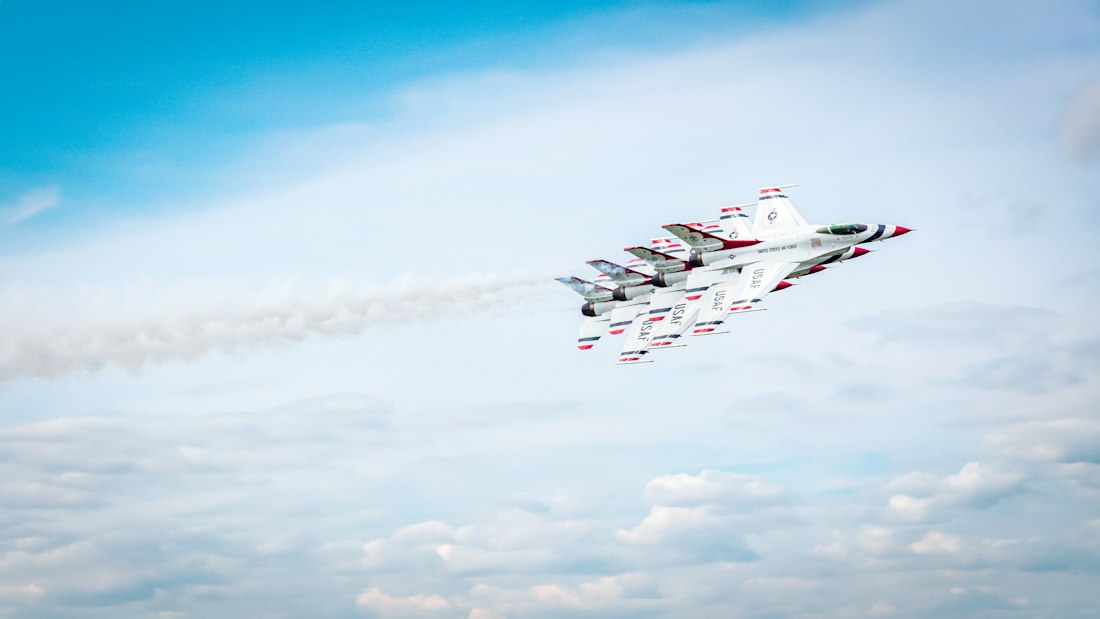
VENOM stands for Viper Experimentation and Next-generation Operations Model — "Viper" being the pilots' own nickname for the F-16.
From Verification Flights to Real AI Control
The VENOM program — Viper Experimentation and Next-generation Operations Model, run under its Autonomy Flying Testbed (AFT) effort — converts standard-production F-16s into flying laboratories for autonomy software. DARPA disclosed the milestone on July 16, 2026: the Air Force and DARPA had flown a VENOM-modified F-16 under the control of an AI agent at Eglin Air Force Base in Florida. The path there was staged carefully. Initial flights in June 2026 were piloted missions meant purely to verify that the aircraft's hardware and software modifications worked safely in the air, before any autonomy was engaged. Only after that verification did the program move, in July, to missions where the onboard AI agent actually took control of portions of the flight.
A safety pilot remained in the cockpit throughout, with the ability to transfer control between manual and autonomous modes through a dedicated switch at any point during the flight. DARPA Program Manager Brig. Gen. James Valpiani described the tests as advancing "the infrastructure needed to develop trusted, autonomous air combat capabilities." VENOM test pilot Tim Stevens called simply getting the aircraft into the air "a monumental milestone," representing years of design, modification, and test planning by a team of hundreds.
How This Differs From DARPA's Earlier AI Dogfights
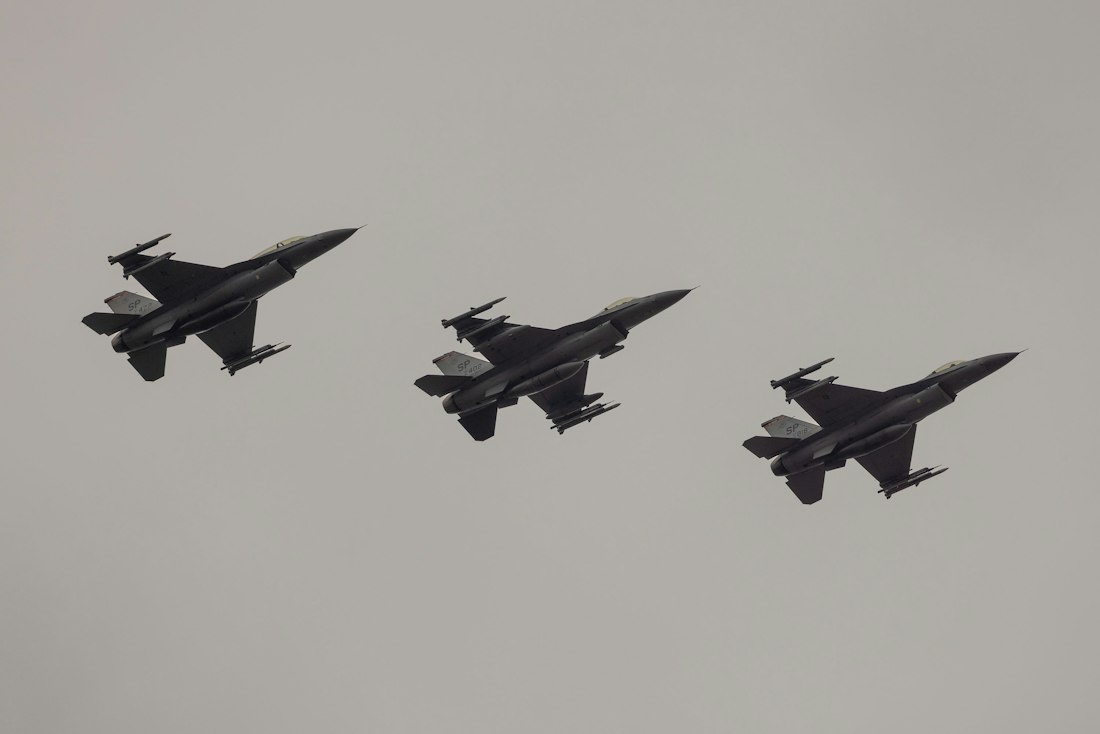
VENOM converts multiple standard-production F-16s into testbeds, a scaling step up from the earlier program's single specialized test aircraft.
This isn't DARPA's first attempt at putting AI in control of a fighter jet — it's the next step in a program lineage that stretches back years. Under the earlier Air Combat Evolution (ACE) program, AI algorithms flew within-visual-range dogfighting engagements against a human-piloted F-16 using the X-62A VISTA, a specially instrumented single test aircraft, with the Air Force reporting 21 test flights and more than 100,000 lines of flight-critical software changes along the way. That work culminated in a real human-versus-AI engagement in 2024, described at the time as the first-ever such dogfight, with test conditions that reached roughly 2,000 feet of separation at 1,200 miles per hour.
VENOM builds on that foundation but changes the scale and the goal. Instead of one heavily customized aircraft, it converts a small fleet of standard F-16s into testbeds capable of rapidly hosting different autonomy software packages — a deliberate move from proving the concept works to proving it can be developed and iterated on faster, across more aircraft. The newer Artificial Intelligence Reinforcements (AIR) program, which VENOM now supports, extends the ambition further still: rather than one-on-one dogfighting, AIR is aimed at beyond-visual-range combat and multi-ship formations, where an AI agent's job is less about turn rate and more about track quality, missile kinematics, and coordinating with other aircraft in a formation.
ACE Program (2019-2024)
Tested AI dogfighting in simulation and on the single X-62A VISTA test aircraft, climaxing in a real human-vs-AI engagement.
VENOM-AFT (2024-present)
Converts multiple standard F-16s into a fleet of testbeds for faster, more scalable autonomy software testing.
AIR Program
Uses the VENOM fleet to push beyond dogfighting into beyond-visual-range combat and multi-aircraft coordination.
Collaborative Combat Aircraft
A related but separate effort building actual uncrewed drone wingmen, like the General Atomics YFQ-42, directed by human pilots.
No Pilots Are Being Replaced — Yet
It's worth being precise about what this milestone does and doesn't represent, since headlines about "AI fighter jets" tend to run ahead of the actual scope. This was not the flight of a fully autonomous fighter, and it wasn't a demonstration of any uncrewed weapons capability — a human pilot was in the cockpit for the entire flight, monitoring the AI agent and able to reclaim manual control instantly. Officials have been explicit since the VENOM aircraft first arrived at Eglin that the jets "will never fly without a human component."
The actual goal, according to DARPA, is different from replacing pilots outright: it's to "pave the way for human pilots to seamlessly command and orchestrate teams of autonomous, uncrewed aircraft." In that framing, the human pilot's role shifts from personally flying every maneuver to acting more like a mission commander — setting intent and constraints while autonomy software handles time-sensitive execution, whether that's within their own aircraft or across a formation that includes uncrewed drone wingmen built under the separate Collaborative Combat Aircraft program.
Thousands of Simulated Flights Before the Real One
Putting an untested AI agent in control of a real fighter jet's flight surfaces is not a decision made lightly, and the safety process behind VENOM reflects that. Before any physical flight, engineers ran extensive ground testing — engine runs, avionics checks, and software validation — alongside software-in-the-loop and hardware-in-the-loop testing designed specifically to verify that autonomous commands could never exceed the aircraft's structural limits or impose unsafe physiological loads on the pilot. Simulation work started back in 2024 with simple one-versus-one engagements before expanding to more complex two-versus-two scenarios, covering both within-visual-range and beyond-visual-range situations.
Maj. Trent McMullen of the 40th Flight Test Squadron, which led much of the developmental testing at Eglin, has described running individual test scenarios up to 1,000 times in simulation to study how small variations affect the AI's decisions and the aircraft's resulting behavior. That level of repetition is standard practice for flight-critical software validation, but it underscores how much invisible groundwork sits behind a single, brief real-world flight — the July 2026 milestone was less a sudden breakthrough than the visible tip of years of incremental, carefully audited testing.
How Big a Deal Is This, Really?
A meaningful engineering milestone, not a sudden leap to robot fighter pilots.
The genuine significance here is the shift from a single specialized research aircraft to a scalable fleet of testbeds built from standard-production jets — that's the kind of infrastructure that turns a research demo into an actual development pipeline. It's a real, measurable step forward for autonomous combat aviation, built carefully with safety pilots and staged verification flights rather than a rushed publicity stunt. But the near-term reality remains a human in every cockpit, with autonomy handling specific tasks under close supervision rather than independent combat decision-making.
Frequently Asked Questions
Did an AI really fly a real F-16 fighter jet?
Yes, for portions of a real flight. In July 2026, DARPA and the US Air Force flew a VENOM-modified F-16 with an AI agent controlling the aircraft's flight surfaces and throttle, while a human safety pilot remained in the cockpit and could take back control at any moment through a dedicated switch.
Is this the same as DARPA's earlier AI dogfight tests?
It builds on that earlier work but is a distinct program. DARPA's ACE program tested AI dogfighting on the X-62A VISTA, a specially modified single test aircraft, including a real human-vs-AI engagement in 2024. VENOM instead converts multiple standard-production F-16s into a fleet of testbeds, aimed at scaling autonomy testing rather than proving it on one aircraft.
Will AI actually fly combat missions without a pilot soon?
Not in the near term for crewed fighters like the F-16 tested under VENOM, which officials say will never fly without a human in the cockpit. The more immediate application is Collaborative Combat Aircraft — separate uncrewed drone wingmen, like the General Atomics YFQ-42, designed to be directed by a human pilot rather than fly solo combat missions.
More AI News, Explained Clearly
Browse our full library of AI news breakdowns, updated as new stories develop.
More from the creator
Explore two other projects from the same creator.