What Is GLM-5.2? Z.ai's 1-Million-Token Open-Weight Model
Z.ai — the Beijing lab formerly known outside China as Zhipu AI — has spent 2026 shipping GLM updates at a pace few labs can match. GLM-5.2 is the one that made people outside the open-weight community pay attention: a five-times larger context window than its predecessor, a new selectable reasoning-effort system, and coding benchmark scores that put it in the same conversation as Claude Opus and GPT-5.2. Here's what actually changed, what it costs to run, and where it fits next to the closed frontier models.

GLM-5.2 is trained and served by Z.ai, and its full weights are also downloadable for anyone to self-host.
Z.ai's Long-Context Coding Flagship
GLM-5.2 is a large-scale reasoning model from Z.ai, released under the MIT open-weight license with a 1,048,576-token (roughly 1 million) context window — up sharply from the 200K-token window on GLM-5.1. It's tuned for long-horizon agent workflows, project-level software engineering, and multi-step automation, with two selectable reasoning-effort modes so you can trade speed for depth on a per-request basis.
It sits inside a busy GLM-5 family: GLM-5-Turbo is a closed-source, speed-tuned sibling from March 2026, and GLM-5V-Turbo is a separate multimodal, vision-capable coding model. GLM-5.2 itself is the text-first, long-context flagship — the one Z.ai wants developers reaching for when a task needs to hold an entire codebase or a long agent trajectory in memory at once.
From GLM-5.1 to a Million-Token Window
1M-token context
A five-fold expansion over GLM-5.1's 200K window, aimed at holding full repositories or long agent session histories without losing earlier context.
Effort-level system
Reasoning efforts of "high" and "xhigh" let you dial how much the model deliberates before answering, with xhigh mapping to maximum reasoning depth.
Long-horizon coding
Built to sustain project-level software engineering and multi-step automation, following the "plan, execute, test, fix" loop earlier GLM-5 releases demonstrated.
Same family DNA
Z.ai describes GLM-5.2 as following the same playbook as GLM-5.1: refined post-training on top of a familiar architecture, rather than a ground-up rebuild.
Whether GLM-5.2 inherits any of GLM-5V-Turbo's multimodal vision capabilities hasn't been confirmed in Z.ai's own launch materials — for now, it reads as a text-first model, with image and video understanding staying in GLM-5V-Turbo's separate lane.
How to Actually Run GLM-5.2
There are three practical ways to get GLM-5.2 into a workflow, and which one makes sense depends almost entirely on how much infrastructure you're willing to manage. The simplest is Z.ai's own hosted API — sign up, generate a key, and you're billed per token at the rates in the table below. That's the path most teams start with, since it requires no GPU provisioning and the reasoning-effort parameter is exposed directly in the API, so switching between "high" and "xhigh" is a single request field rather than a deployment change.
The second route is a third-party inference router such as OpenRouter, which proxies requests to GLM-5.2 across several backend providers and picks whichever has capacity, often at a small markup over Z.ai's own price. This matters more than it sounds: open-weight models occasionally hit rate limits or outages on a single provider's infrastructure during traffic spikes, and a router falling back to a second host keeps a production agent pipeline from stalling mid-task. The trade-off is one more layer between you and the model, which can complicate debugging when output quality suddenly shifts — you're not always sure which backend served a given request.
The third option is self-hosting the full weights, which is where the MIT license actually pays off for teams with data residency requirements or unusually high, steady request volume. GLM-5.2's size means full-precision serving needs multiple high-memory GPUs in the 80GB-per-card class; most self-hosters instead run a quantized version (4-bit or 8-bit) through inference engines like vLLM or SGLang, trading a small amount of benchmark accuracy for a hardware footprint that a single well-specced server can handle. Community-maintained quantized checkpoints tend to appear on Hugging Face within days of a GLM release, though it's worth checking the specific quantization method against your inference engine's supported formats before committing to one.
For agent frameworks specifically, GLM-5.2 exposes an OpenAI-compatible API shape, so tools built against LangChain, CrewAI, or a custom agent loop that already targets GPT-style endpoints typically need only a base-URL and model-name swap rather than a rewrite. That compatibility is one of the more underrated reasons open-weight Chinese models have gained traction in Western agent-tooling stacks this year — the integration cost of trying one is often a config change, not an engineering sprint.
GLM-5.2 vs Claude Opus and GPT-5.2
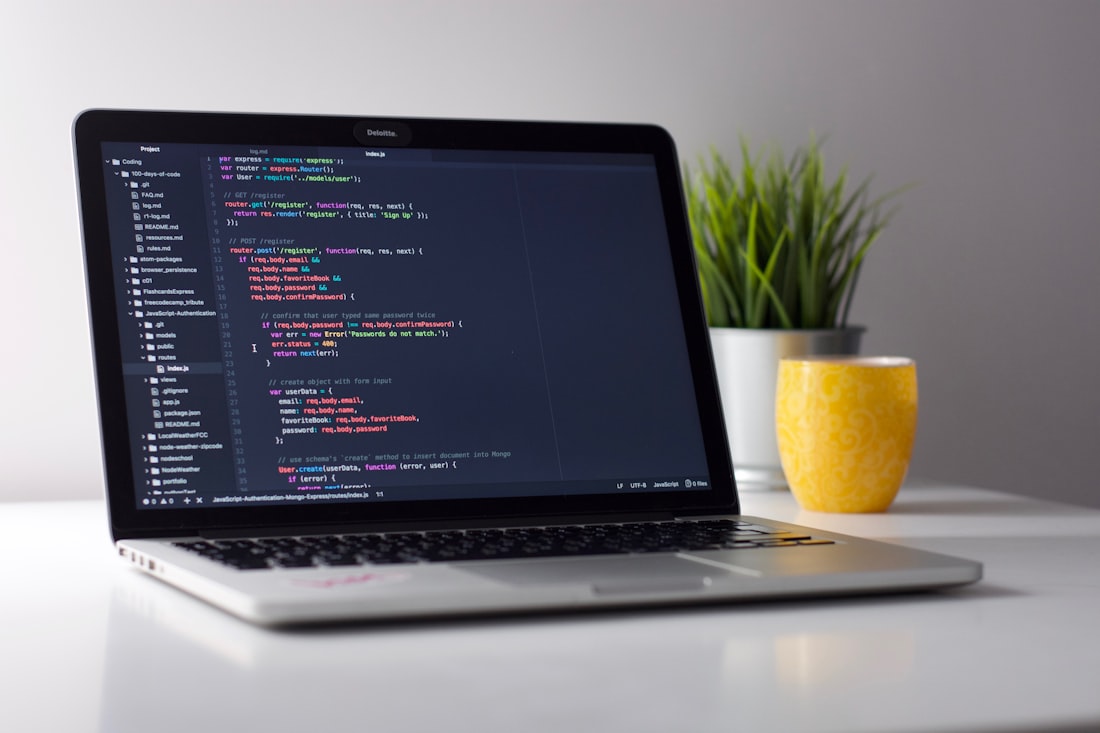
Independent testers have run GLM-5.2 through real production codebases, not just published benchmarks.
| GLM-5.2 | Claude Opus 4.8 | GPT-5.2 | |
|---|---|---|---|
| Maker | Z.ai | Anthropic | OpenAI |
| Weights | Open (MIT license) | Closed | Closed |
| Context window | 1,048,576 tokens | Varies by tier | Varies by tier |
| Approx. API price | ~$0.47 / $1.49 per 1M tokens (in/out) | Premium tier pricing | Premium tier pricing |
GLM-5's technical report reportedly showed it beating GPT-5.2 on SWE-bench Multilingual at GPT-5.2's highest reasoning setting, and that was before two further GLM-5 iterations. Independent hands-on testers have found GLM-5.2 competitive with Opus-class models on real coding tasks, at a small fraction of the token cost — one widely cited test ran a 45-minute autonomous coding session across six million tokens for around $3.36. Vendor and community benchmark claims still deserve a healthy discount until you've run your own workload through it, though; token pricing and cache-hit rates vary a lot by provider.
Where It Fits
- Open MIT-licensed weights — download, fine-tune, and self-host with no vendor lock-in
- 1M-token context handles large repos and long agent sessions in one pass
- Token pricing is a fraction of closed frontier models at similar capability
- Selectable reasoning effort lets you save compute on easy requests
- No confirmed multimodal (image/video) support in this release
- Self-hosting at full scale still requires serious GPU infrastructure
- Independent, apples-to-apples benchmarks are still catching up to the release pace
- Smaller surrounding tooling ecosystem than Claude or GPT in the West
Frequently Asked Questions
What is GLM-5.2?
An open-weight, MIT-licensed reasoning model from Z.ai with a 1-million-token context window, built for long-horizon agent workflows and project-level coding.
Is GLM-5.2 free to use?
The weights are free to self-host under MIT. Z.ai's hosted API and third-party routers charge a small per-token rate, well below most closed frontier models.
How does GLM-5.2 compare to Claude and GPT?
It's reported to beat GPT-5.2 on some coding benchmarks and has held up well against Claude Opus in independent hands-on tests, though it isn't the outright leader on every measure.
More AI Model Guides, Written Clearly
Browse our full library of AI model explainers, updated as new releases land.
More from the creator
Explore two other projects from the same creator.