Can AI Analyze Blood Test Results?
Pasting a blood test PDF into a chatbot has become a common first move after getting lab results back, often faster than waiting for a doctor's callback. It genuinely helps translate jargon into plain language. Whether it reliably catches what matters is a separate, more complicated question, and the research on it is more mixed than either the hype or the panic suggests.
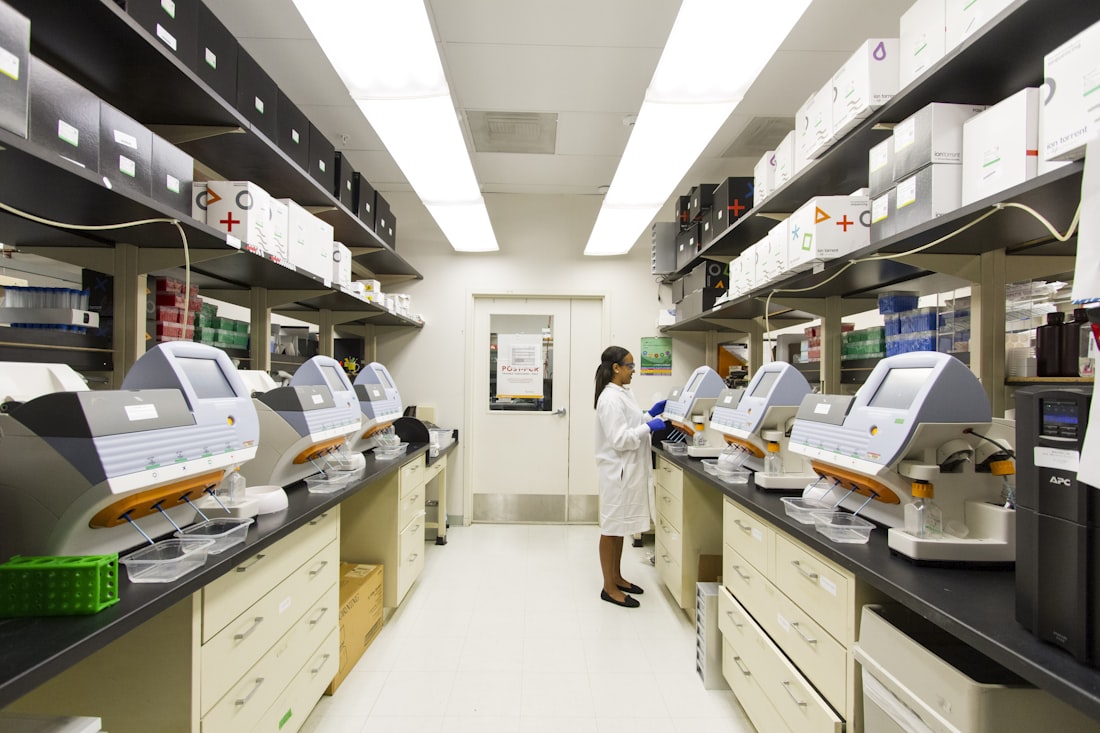
A lab report is dense with numbers and reference ranges most people never learn to read.
Can General AI Chatbots Actually Read a Blood Test?
They can read it in the sense of processing the text and describing what each value generally represents. Whether they reliably catch what a clinician would catch is a different, weaker claim. A widely cited case study by WellnessPulse tested five popular AI models, ChatGPT, Claude, Perplexity, DeepSeek, and Gemini, on the same lipid panel and complete blood count, and found that none of them recognized a deliberately included electrolyte testing error, and all of them failed to identify a case of anemia that should have been flagged for further evaluation.
This finding lines up with a separate, more academic study that found general-purpose models like ChatGPT-3.5 retrieving correct normal lab ranges only 38.4% to 45.6% of the time without additional support, a strikingly low number for a task that sounds like simple lookup. The problem is not that these models cannot process numbers, it is that they answer confidently even when uncertain, and a confident wrong answer about a lab value is harder to catch than an obviously wrong one.
Do Purpose-Built Medical AI Tools Do Better?

Uploading a PDF of lab results to a general chatbot has become a common first step for many patients.
| Approach | Task | Accuracy |
|---|---|---|
| General ChatGPT, no added tools | Retrieving correct lab reference ranges | 38.4% (question level) |
| GPT-4 with retrieval augmentation (Lab-AI research system) | Same reference-range retrieval task | 99.3% (question level) |
| ConsultBot, hybrid rule-based plus LLM tool | Interpreting blood gas results against a clinical answer key | 98% (99 of 101 cases) |
| General AI models, unaided | Full clinical interpretation of a lab panel | 2 to 3 out of 5 points on a scored rubric, missing key abnormalities |
That gap between roughly 38% and 98% is one of the clearest illustrations anywhere in medical AI of why the specific engineering matters more than the underlying model. Adding retrieval-augmented lookups against a verified reference database, or combining rule-based logic with a language model, closes most of the accuracy gap. A general chatbot working from its own training data alone, with no such scaffolding, performs meaningfully worse.
So What Should You Actually Expect From Pasting Your Results Into ChatGPT?
A reasonable, jargon-free explanation of what each test measures and roughly what a typical reference range looks like, which genuinely helps if you do not know what "MCV" or "AST" means. What you should not expect: reliable detection of a subtle abnormality, correct handling of values that interact with each other (like anemia patterns across several related tests at once), or an assessment that accounts for your specific medical history, medications, and prior results, none of which the model has access to unless you provide it, and even then it may not weigh it correctly.
A useful mental model: a general AI chatbot is better at translation than at detection. It can turn a dense lab report into readable English more reliably than it can independently notice that two of your values together suggest a specific problem. For the physical, non-blood-based version of a similar interpretation gap, see our medical imaging guide.
What Exactly Did the Models Miss in the WellnessPulse Study?
The study used a sample with a deliberately included electrolyte testing error and early signs of anemia in the accompanying complete blood count. Every one of the five tested models, ChatGPT, Claude, Perplexity, DeepSeek, and Gemini, missed the electrolyte problem entirely, and none flagged the anemia pattern as needing further evaluation. ChatGPT and Claude scored highest overall, at three points out of a possible scale, offering partial to accurate interpretation with some general advice, but still without recommending specialist consultation or a limitations disclaimer.
Perplexity scored lowest, offering only a partial interpretation with no meaningful additional guidance. The consistency of the miss across all five models, rather than one outlier failing, is the more important finding: it suggests a general pattern in how these models handle interacting lab values, not a quirk of one specific product.
What Are the Specific Failure Modes to Watch For?
A clinician interprets a lab result in the context of your full history, something no chatbot has access to.
- Asking what a specific test name generally measures
- Getting plain-language context for a reference range
- Preparing questions to bring to your doctor's appointment
- Understanding a result your doctor already explained but you forgot
- Trusting a "your results look normal" summary without a clinician check
- Combining several test results yourself to draw a conclusion
- Skipping a follow-up appointment because the AI seemed reassuring
- Using it for values with a narrow, high-stakes normal range, like potassium or INR
Note the pattern: the safe uses are all about understanding, and the risky ones are all about relying on the tool for a judgment call. That mirrors the wider distinction we draw throughout this series between what AI health tools can tell you and what they should not be trusted to decide, covered fully in our AI health apps guide.
What About Apps That Market Themselves Specifically for Blood Test Analysis?
A newer category of consumer apps markets itself specifically for blood test interpretation, sometimes citing very high accuracy figures for a proprietary model. Treat these claims the same way you would treat any unverified marketing figure: look for an independent, peer-reviewed validation study behind the number, not just the company's own claim, and remember that a dedicated laboratory, doctor, or clinical decision-support tool with real regulatory clearance remains the gold standard for anything you would act on.
How Does a Clinician's Process Differ From a Chatbot's?
A physician interpreting a lab panel is not just reading numbers against a printed reference range. They weigh your specific history, prior results for comparison, medications that could shift a value, and how several tests interact with each other, information a chatbot has no reliable way to access unless you supply every piece of it accurately and it correctly weighs all of it together.
That is the structural reason a specialized tool like ConsultBot, built with domain-specific rule-based logic layered under a language model, can hit 98% accuracy on a defined task like blood gas interpretation, while a general chatbot handling the same numbers without that scaffolding, and without your full history, performs far less reliably on the broader, messier task of "tell me what my results mean."
Is There One Rule of Thumb Worth Remembering?
If a general AI chatbot's explanation of your blood test conflicts with, or seems more reassuring than, what a nurse or doctor previously told you, trust the human, and ask them directly rather than the chatbot to resolve the discrepancy. The studies throughout this guide consistently show general chatbots underperforming specialized tools and human clinicians specifically at catching abnormalities and interactions between values, which is exactly the situation where a conflict like that would arise.
So Is It Worth Using at All?
Yes, for the specific job of translation, and no, for the specific job of relying on it to catch what matters. Use a general chatbot to turn confusing lab jargon into plain English, then bring your actual results and the chatbot's summary to your doctor if anything is unclear or concerning, rather than treating a reassuring chatbot response as the final word on your health.
Frequently Asked Questions
Can ChatGPT accurately read my blood test?
It can explain what your test values generally mean, but studies have found general-purpose AI models missing real abnormalities, including a documented case where none of five tested models caught an electrolyte error or flagged anemia in the same sample data.
Is it safe to upload my lab results to an AI chatbot?
For general explanation, most people find it reasonably useful. For catching subtle or interacting abnormalities, research shows general chatbots perform unreliably, so any concerning or unclear result should still go to a clinician.
Are there AI tools built specifically for lab result interpretation?
Yes. Research systems combining retrieval-augmented lookups or rule-based logic with a language model have shown far higher accuracy, in the 98 to 99% range on specific tasks, than general chatbots used without that scaffolding.
Why do general AI models struggle with lab values?
Partly because retrieving exact reference ranges and correctly weighing several interacting values is a different task from general conversation, and partly because these models answer confidently even when they are uncertain or wrong.
More AI & Health Guides, Written Clearly
Browse our full library of AI and health explainers, updated as the tools and evidence change.
More from the creator
Explore two other projects from the same creator.