What Happens to Traditional Google Searches as AI Overviews Grow
Type a question into Google today and there's a real chance you'll never see the classic list of ten blue links at all — an AI-written paragraph will answer it first, above everything else. That shift has been happening gradually since May 2024, but by 2026 the numbers are large enough to describe an actual behavior change, not just a new feature. Here's what the data says is really happening to traditional search.

A growing share of Google searches now end on the results page itself, without a single click to an outside website.
Traditional Search Hasn't Disappeared — It's Shrinking Into a Smaller Slice of Google
Google's own results page increasingly answers questions itself before you ever reach a traditional link, and a majority of searches now end right there. Independent research from SparkToro puts the zero-click share of U.S. Google searches at roughly 68% in early 2026, up from about 60% two years prior — meaning the classic experience of typing a question, scanning ten blue links, and clicking through to a website is now the minority behavior, not the default one.
That doesn't mean the ten-blue-links page is gone. It means it's been pushed further down the page, shown for a narrower set of query types, and increasingly treated by Google as a secondary option rather than the primary answer. The AI Overview sits at the top; the traditional results — the format search has used for two and a half decades — are still there underneath it, for anyone who wants to keep reading.
How Much Do AI Overviews Actually Cut Into Clicks?
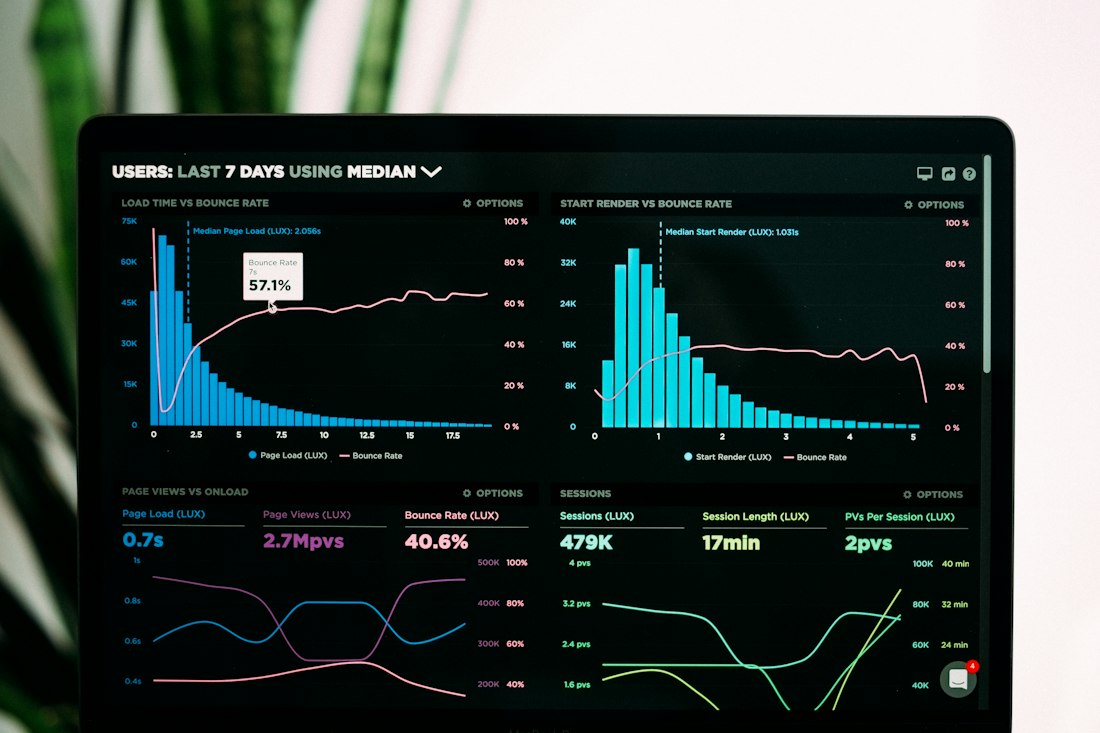
Independent studies converge on the same direction of travel, even when the exact percentage differs by methodology.
Every major independent study on this question points the same direction, even though the exact size of the effect varies by methodology. Pew Research Center tracked the actual browsing behavior of 900 U.S. adults across nearly 69,000 real Google searches and found people clicked a traditional organic result only 8% of the time when an AI Overview appeared, compared with 15% when it didn't — roughly half the click rate. Separately, Pew found that 26% of AI Overview sessions ended the search entirely with no further activity, compared with 16% for sessions without one.
Seer Interactive ran a larger-scale version of the same question, tracking 53 brands across 2.43 billion search impressions, and measured an even steeper 61% drop in organic click-through rate on queries where an AI Overview appeared. Ahrefs, looking specifically at pages holding the #1 organic ranking, measured a 58% CTR drop for that top position alone — a notable finding, since ranking first used to be the single most reliable way to earn a click, and that guarantee has visibly weakened.
There is a genuine methodological range here — Amsive Digital's more conservative study across 700,000 keywords found a smaller 15.5% decline — and it's worth treating any single number as an estimate rather than a fixed law. But no credible study in 2026 has found AI Overviews leaving organic click-through rates unchanged, let alone improving them.
A Partial Rebound, Not a Reversal
One nuance the headline numbers miss: click-through rates on AI-Overview-present queries didn't just fall and stay flat — they bottomed out around 1.3% in December 2025 and climbed back to about 2.4% by February 2026, according to Seer Interactive's tracking. That's a meaningful rebound in percentage terms.
It isn't a sign the disruption is over, though. Over the same window, click-through rates on queries with no AI Overview kept climbing too, and faster — meaning the gap between "has an AI Overview" and "doesn't" widened rather than closed. Google also shipped several changes to AI Overviews in May 2026 specifically aimed at web discovery: inline links placed next to bullet points, hover previews on desktop, and article suggestions appended to the end of an answer. Read plainly, these changes are Google's own acknowledgment that the click-loss problem was significant enough to need a product response, more than a year after AI Overviews first rolled out broadly.
Not Every Website Is Affected the Same Way
The impact is uneven across query types and industries, and that unevenness is arguably more useful to understand than the topline average.
Informational content
Hit hardest. A page written to answer a single factual question is exactly what an AI Overview is built to summarize and absorb without a click.
Transactional & commercial pages
Far less affected. Product pages, pricing comparisons, and anything with a "buy" or "book" intent still tend to route people through to a click, since an AI summary can't complete the transaction itself.
News publishers
Among the hardest hit. Press Gazette's analysis found major publishers lost roughly a third of Google search referral traffic year-over-year, with some individual sites down 26–55%.
Cited vs. uncited pages
Both lose clicks compared to the pre-AI-Overview baseline, but Seer Interactive found cited brands still earn meaningfully more organic and paid clicks than uncited competitors on the same results page.
Even Wikipedia — the single most frequently cited domain inside AI Overviews — saw an 8% decline in human pageviews, which is probably the cleanest illustration of the whole dynamic: being the source an AI trusts most doesn't protect a site from being the source people no longer need to visit.
Why Google Is Willing to Reduce Its Own Referral Traffic
It's worth asking why Google would build something that visibly reduces the number of clicks flowing to the wider web, since that web is exactly what Google's own index depends on. The honest answer, based on Google's public messaging and search behavior data, is that impressions and engagement with Google's own results page are up even as outbound clicks are down — one analysis found a 49% rise in impressions alongside a 30% drop in clicks over the same period. Google is capturing more attention on its own platform rather than routing it elsewhere, which is a rational business decision for Google even though it's a difficult one for the sites it depends on for source material.
Separately, competitive pressure plays a role: ChatGPT, Perplexity, and other AI-first answer products already give people a direct-answer experience, and Google's leadership has been explicit that AI Mode — its more thorough, conversational search product — is scaling quickly, with Google reporting more than a billion monthly users and query volume more than doubling each quarter as of mid-2026. Standing still on AI Overviews while competitors expand their own answer engines was never a realistic option for Google.
Frequently Asked Questions
What percentage of Google searches now end without a click?
Roughly 68% of U.S. Google searches ended with no click in early 2026, per SparkToro's clickstream research, though a separate Datos study using a stricter methodology measured a lower and slightly declining figure over the same period — the direction of travel is more consistent across studies than the exact number.
Do AI Overviews really lower click-through rates that much?
Yes, across nearly every independent study, though the size varies by methodology — from roughly 15% at the most conservative end to 61% at the most rigorous large-scale study (Seer Interactive, 2.43 billion impressions).
Is the traditional results page going away completely?
No. AI Overviews appear on about one in five searches, not all of them, and traditional organic results still show up below or alongside the summary for most queries. Shopping, local business, and navigational searches remain largely unaffected.
Does getting cited in an AI Overview help or hurt a website?
Cited pages earn more clicks than uncited pages on the same results page, but even a cited page earns far fewer clicks than the same ranking position did before AI Overviews existed — citation helps relatively, without fully offsetting the overall decline.
Should a website change its strategy because of this shift?
Many publishers are leaning further into transactional and commercial content, original data, and tools that an AI Overview is less likely to fully absorb, while still investing in clear, well-structured informational writing, since citation likelihood tracks closely with strong traditional rankings.
More AI Guides, Written Clearly
Browse our full library of AI explainers and how-tos, updated as the tools change.
More from the creator
Explore two other projects from the same creator.