What Is OpenAI's Jalapeño Chip? The Inference ASIC, Explained
OpenAI just did something none of its rivals have: it built its own chip. Jalapeño isn't a GPU, isn't sold to anyone else, and took roughly nine months to go from schematic to silicon — a pace the chip industry has never seen before. Here's what it actually does, why OpenAI's own models helped design it, and what it means for the company's shaky path to profitability.
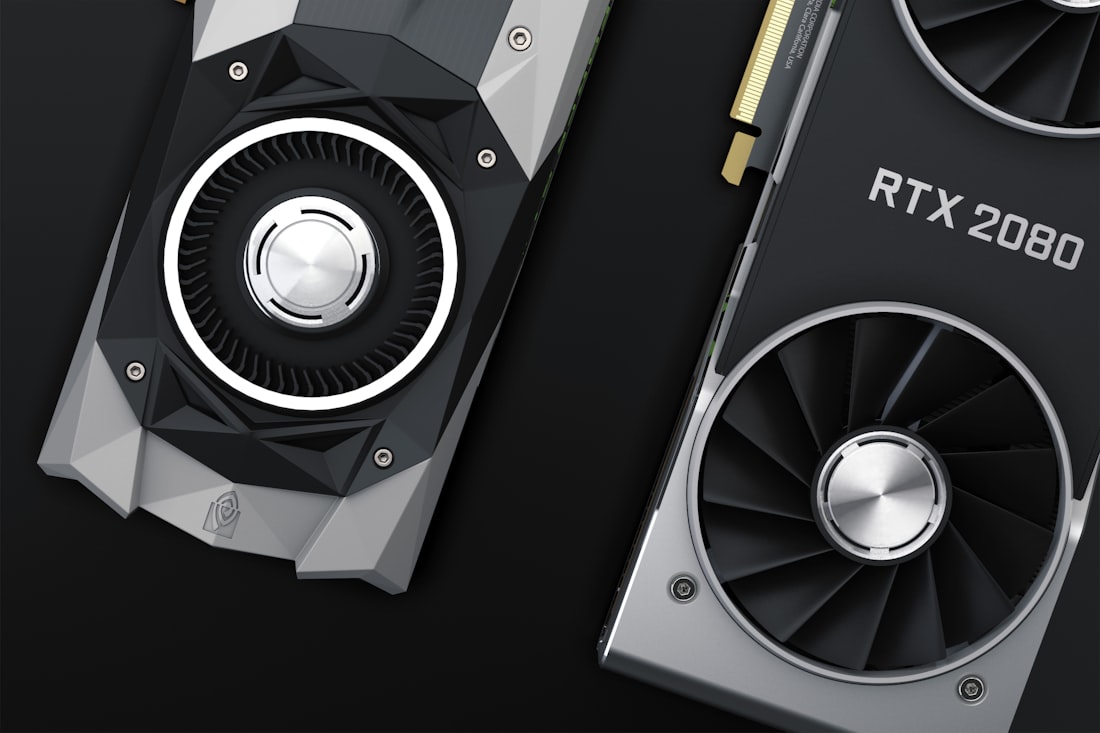
Jalapeño is OpenAI's first proprietary silicon, co-designed with Broadcom and manufactured by TSMC specifically for AI inference.
OpenAI's First Chip, Built to Do One Thing
Jalapeño is OpenAI's first custom-built AI accelerator, unveiled June 24, 2026 in partnership with Broadcom. Unlike Nvidia's GPUs, which are general-purpose processors capable of both training new models and serving finished ones, Jalapeño is an ASIC — an application-specific integrated circuit engineered to do exactly one job extremely well: inference, the process of running an already-trained model to generate responses for real users. OpenAI calls it an "Intelligence Processor," the first accelerator in what the company says will be a multigenerational compute platform built jointly with Broadcom.
The partnership was first announced in October 2025, following the well-worn playbook Google, Amazon, and Microsoft have already used for their own custom AI silicon: contract a specialist chip designer to build silicon that stays entirely in-house. OpenAI worked closely with Broadcom's custom ASIC division on the design, while TSMC handles manufacturing and Celestica manages board, rack, and system integration. Notably, OpenAI says its own AI models actively assisted in the chip's design and optimization process — the tools serving users today helped engineer the hardware that will serve future users.
The Problem Jalapeño Is Solving

Inference — serving a trained model's responses to millions of users — is where OpenAI spends the overwhelming majority of its compute budget.
Training a model is a one-time (or occasional) event: enormous compute thrown at a dataset for weeks or months, producing a finished model. Inference is different — it happens every single time someone sends a message to ChatGPT, calls the API, or runs an agent, which for a company serving hundreds of millions of users is where the overwhelming majority of ongoing compute cost actually lives. That's OpenAI's most uncomfortable financial reality heading into its IPO: the company spent roughly $14 billion serving users in 2025 alone, and inference cost is the single biggest lever it has to pull toward profitability.
Jalapeño specifically targets the bottlenecks that matter most for that workload: minimizing data movement, balancing compute against memory bandwidth, and reducing communication delays during the "prefill" phase where a model processes an incoming prompt before generating a response. OpenAI's head of hardware, Richard Ho, described the goal as designing "around the kernels, memory movement, networking, and serving patterns that matter most for frontier AI models" — the kind of narrow, obsessive optimization a general-purpose GPU can't match, precisely because it has to be good at everything else too.
How It Actually Performs
OpenAI shared its first detailed benchmark results at the Hot Chips conference on August 25, 2026, testing Jalapeño against an Nvidia Blackwell system on SemiAnalysis's InferenceX benchmark. The company reported both higher tokens-per-user and higher throughput-per-kilowatt than the current state of the art — a combination that matters because most inference hardware has historically had to trade one for the other. According to Richard Ho, "the results show a very, very significant performance advance over state of the art... it's very efficient to serve a lot of customers, but it can also be very low latency."
| Jalapeño (B0 stepping) | Nvidia Rubin (comparison) | |
|---|---|---|
| Compute (MXFP4) | 13.4 PFLOPs | Not directly disclosed |
| Power draw | 700W | 900–1,150W |
| Memory | HBM4 at 15.4TB/s | Varies by config |
| Throughput (DeepSeek R1) | 700+ tokens/sec/user | Comparison basis varies |
| Workload scope | Inference only | Training + inference |
Independent analysts have urged some caution on the comparison: the benchmark measured against an Nvidia Blackwell system, and by the time Jalapeño reaches full deployment, Nvidia's newer Rubin platform will likely be the more relevant comparison point. Yole Group technology analyst Adrien Sanchez told CNBC that a "hyperscaler-designed chip can now match or beat Nvidia's Blackwell-class GPUs on inference efficiency" — a real threat to Nvidia's fast-growing and highly profitable inference business, even if Nvidia's overall compute dominance and CUDA software ecosystem remain intact for now.
How Fast This Actually Moved
Partnership announced
OpenAI and Broadcom publicly confirm they are working together on custom AI accelerator silicon.
Jalapeño unveiled
OpenAI and Broadcom present the chip, delivered to Sam Altman and Greg Brockman by Broadcom's leadership. Early testing results are described as promising but preliminary.
First benchmarks published
OpenAI shares detailed InferenceX results at Hot Chips, confirming higher throughput-per-watt and lower latency than current Nvidia systems in tested scenarios.
Deployment begins
Jalapeño starts entering OpenAI's own compute infrastructure at gigawatt scale, with Microsoft named as one of the data center partners for the rollout.
Why This Matters for OpenAI's Future
- Reduces reliance on Nvidia for OpenAI's single biggest recurring cost: serving users
- Gives OpenAI a full-stack advantage, tuning models, chips, and software together
- A credible signal to IPO investors that OpenAI has a real profitability lever
- Sets up a multigenerational platform rather than a one-off chip
- Jalapeño is inference-only; OpenAI still needs GPUs for training new models
- It's captive silicon — not sold or rented to outside developers
- An ASIC can't adapt if OpenAI's model architecture changes significantly
- Full deployment is still months away, and real-world results may differ from benchmarks
The honest takeaway: Jalapeño doesn't make OpenAI's massive infrastructure spending disappear, but it's the clearest concrete step the company has taken toward controlling its own cost structure rather than being permanently dependent on Nvidia's pricing and supply. Whether it moves the needle meaningfully on profitability will depend on how it performs once it's actually serving live traffic at scale — not just in a benchmark.
Frequently Asked Questions
What is OpenAI's Jalapeño chip?
Jalapeño is OpenAI's first custom-built AI accelerator, co-designed with Broadcom specifically for LLM inference, the process of serving a trained model's responses to users. Unlike Nvidia's general-purpose GPUs, Jalapeño is an ASIC (application-specific integrated circuit) built to do one job extremely well, and OpenAI says early testing shows significantly better performance-per-watt than current state-of-the-art alternatives.
Does Jalapeño replace Nvidia GPUs for OpenAI?
Not entirely. Jalapeño only handles inference, not training, so OpenAI still needs Nvidia and other GPUs for training new models. The chip is meant to reduce OpenAI's dependence on Nvidia for its highest-volume workload — serving ChatGPT, the API, and agents to users — rather than eliminate GPUs from its stack altogether.
When will Jalapeño actually be used?
OpenAI says Jalapeño will begin deployment in its computing infrastructure by the end of 2026, ramping over multiple years as part of a planned multigenerational chip platform. It is captive silicon built for OpenAI's own use, not a product sold or rented to outside developers.
More AI Explainers, Written Clearly
Browse our full library of AI guides, updated as the industry changes.
More from the creator
Explore two other projects from the same creator.