Why AI-Generated Images Still Get Hands, Ears, and Text Wrong
AI-generated faces stopped looking obviously fake years ago. Hands still regularly come out with six fingers, ears sit at slightly wrong angles, and text inside images turns into unreadable near-letters. This isn't a minor bug that got missed — there's a real technical reason these specific things are harder, and it explains a lot about how to spot a fake image today.
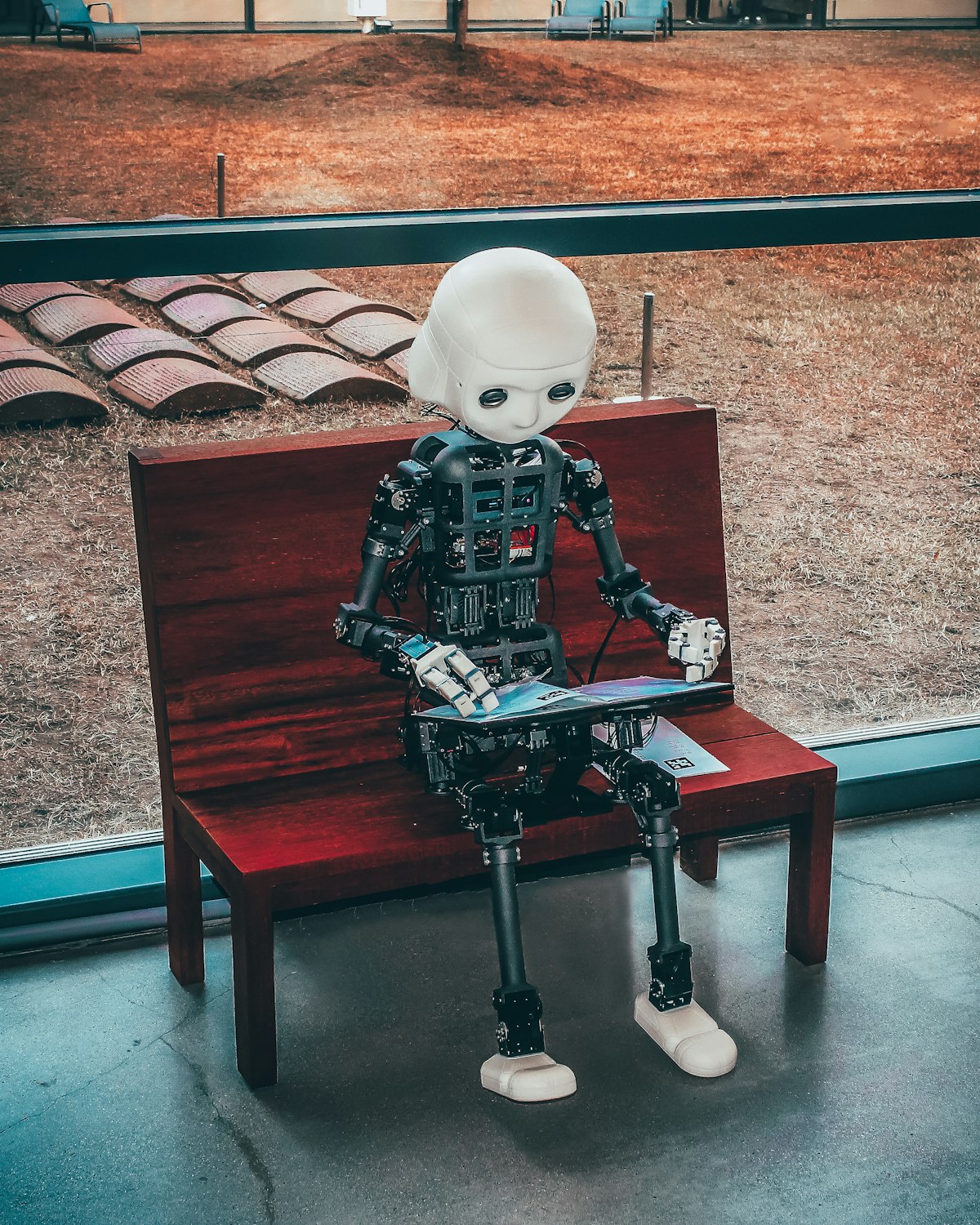
Faces got fixed first. Hands, ears, and text are still catching up, and the reason why is more interesting than it sounds.
It's a Training Data and Complexity Problem, Not a Bug
Image generation models learn by studying enormous numbers of example photos and figuring out statistical patterns in how pixels tend to arrange themselves for a given prompt. Faces are, relatively speaking, a solved problem for this kind of learning: human faces are highly symmetric, follow a fairly consistent structural layout (two eyes, one nose, one mouth, in predictable relative positions), and appear in vast quantities of training data from every angle imaginable. That combination of symmetry, predictability, and sheer volume of examples makes faces easier for a model to learn to generate convincingly.
Hands break nearly every part of that formula. A human hand has more than 27 bones and joints, allowing for an enormous range of poses, angles, and partial occlusions — fingers overlapping, curling, gripping something, half-hidden behind an object. There's also comparatively far less training data that isolates hands specifically compared to the vast quantity of face-focused photography available. The result is a much harder pattern for a model to learn cleanly, which is why hands are where the illusion most often breaks down.
Why These Two Fail For Different Reasons
Ears fail for a slightly different reason than hands. Ears have unusual, highly individual folded cartilage structures that don't follow an obvious symmetric pattern the way eyes or a nose roughly do, and they're frequently partially obscured by hair, angle, or lighting in training photos — meaning models see incomplete or inconsistent examples of ear structure far more often than they see a clean, fully visible face. The result is often a slightly smoothed-over or oddly shaped ear that most people register as "off" without immediately being able to say why.
Text fails for a completely different, more fundamental reason: image generation models aren't actually composing letters as language — they're predicting plausible pixel patterns based on what text-containing images generally look like statistically. A model has learned that signs and labels tend to have dark, angular marks arranged in rows on a lighter background, but it isn't running an actual spelling or typesetting process the way a word processor does. That's why generated text so often looks like real lettering from a distance but dissolves into meaningless squiggles up close — it's visually mimicking text, not writing it.
What's Actually Improving, and What Isn't Yet
| Feature | 2023-2024 Reliability | 2026 Reliability |
|---|---|---|
| Faces | Mostly good, occasional artifacts | Very high, close to photorealistic |
| Hands | Frequently wrong finger count or shape | Improved significantly, still inconsistent especially in complex poses |
| Ears | Often smoothed over or oddly shaped | Better, but still a common tell up close |
| Text in images | Almost always garbled | Short words sometimes work; longer text usually still breaks down |
Newer model architectures and dedicated fine-tuning specifically targeting hands have measurably improved this over the past couple of years, and some tools now offer inpainting features that let a user specifically regenerate just the hand region until it looks right — a workaround that acknowledges the underlying limitation rather than solving it outright. Full sentence-level text generation remains the least reliable of the group across most mainstream tools.
Practical Checks Based on the Actual Cause
The Same Logic Explains Other Odd Details Too
Once the training-data explanation clicks, it predicts other weak points beyond the three most commonly cited. Teeth, for instance, follow a similar pattern to hands — highly variable in count, spacing, and visibility depending on how open a mouth is in any given photo — which is why generated teeth sometimes look slightly too uniform, too numerous, or oddly positioned. Jewelry with intricate repeated detail, like a patterned necklace or a complex earring, often comes out slightly asymmetric between the left and right side, because symmetry has to be inferred rather than copied directly from a single consistent training pattern the way a face's basic layout can be.
Reflections and shadows fall into the same category. A mirror reflection or a cast shadow needs to be geometrically consistent with the rest of the scene in a way that requires the model to reason about physical space rather than just pattern-match a familiar shape, which is a harder computational problem than generating an object in isolation. This is why a generated image can look completely convincing until you specifically check whether a shadow falls in the direction the visible light source would actually produce.
Frequently Asked Questions
Will hands and text eventually get fixed completely?
Likely to keep improving, based on the trajectory over the past few years, but "completely" is a high bar given the underlying complexity gap between faces and hands specifically. Text may lag furthest behind, since it requires the model to essentially learn compositional language rules rather than just visual pattern-matching.
Do all AI image tools have the same weaknesses at the same rate?
No — different providers use different architectures and training approaches, so hand and text reliability varies noticeably between tools at any given time. Some tools have specifically prioritized hand accuracy as a selling point, which is worth checking if this is a priority for your use case.
Why don't hands break down the same way in every generated image?
Simpler poses — a hand resting flat, fingers spread and fully visible — tend to generate more reliably than complex ones involving overlap, gripping, or unusual angles, since simpler poses more closely resemble the clearest examples in the training data.
Is checking hands and text still a reliable way to spot fakes, or is it becoming outdated advice?
It's becoming somewhat less reliable as tools specifically target these known weak points, but it remains one of the more accessible checks an ordinary viewer can perform without special tools, and it still catches a meaningful share of current AI-generated images, particularly from less advanced or older generation tools still in wide use.
Does this same limitation apply to AI-generated video, not just still images?
Yes, and it's often more pronounced in video, since a hand or piece of text now has to stay consistent across multiple consecutive frames rather than just look right in one still moment. This is part of why hands in AI-generated video sometimes appear to subtly shift shape or finger count between frames in a way that's harder to notice at normal playback speed but becomes obvious when paused.
Bottom Line
Hands, ears, and text aren't weaknesses AI companies simply overlooked — they're genuinely harder problems, rooted in less consistent training data and, for text specifically, a fundamentally different kind of task than pattern-matching a face. These are getting better, but they remain the most accessible places for an ordinary person to check when trying to tell a generated image from a real one.
More AI Guides, Written Clearly
Browse our full library of AI tool guides, updated regularly as models and features change.
More from the creator
Explore two other projects from the same creator.