AI Audio Generation Explained: Voices, Music, and Sound
Type a genre and a mood into Suno and get a finished song, lyrics and all, in under a minute. Type a sentence into ElevenLabs and hear it spoken in a voice that sounds unmistakably human. These are different problems solved by related technology — here's how AI audio generation actually works across voice, music, and sound effects, and where the technology still runs into genuine legal and ethical friction.

AI audio generation covers three distinct problems: speech, music, and sound effects, each with its own technical challenges.
One Family of Techniques, Three Different Jobs
AI audio generation covers a cluster of related but distinct capabilities: text-to-speech and voice cloning (generating spoken words in a specific voice), music generation (producing melody, rhythm, and often full songs with vocals from a text prompt), and sound effect synthesis (generating non-musical, non-speech audio like footsteps, ambient noise, or a door creaking). All three rely on models trained on large amounts of audio paired with descriptions or transcripts, using diffusion and transformer techniques similar to those behind image and video generation, adapted for the specific structure of sound.
Despite sharing common technical roots, each of the three areas presents its own particular challenges. Speech has to nail pronunciation and natural-sounding rhythm; music has to maintain structure and coherence across a full song rather than a few seconds; sound effects have to capture physical realism without any linguistic or melodic scaffolding to lean on at all. That's part of why progress hasn't moved at the same pace across all three, even though the underlying model architectures overlap considerably.
How Text-to-Speech and Voice Cloning Work
Modern text-to-speech models are trained on large datasets pairing recorded speech with its transcript, learning the relationship between written text and the acoustic patterns of natural human speech: pitch, rhythm, emphasis, and the subtle variations that make speech sound alive rather than robotic. Voice cloning takes this further by training or fine-tuning a model on samples of one specific person's voice, sometimes needing only a short clip, to capture that individual's distinctive vocal characteristics well enough to generate entirely new sentences in their voice that they never actually said.
Text encoding
Input text is converted into a representation capturing pronunciation, intended emphasis, and pacing.
Acoustic modeling
The model predicts the acoustic features (pitch, tone, rhythm) that should accompany each part of the text.
Voice conditioning
For cloning, a reference sample of the target voice conditions the output to match that speaker's unique characteristics.
Waveform synthesis
A vocoder or diffusion process converts the acoustic representation into an actual audio waveform you can hear.
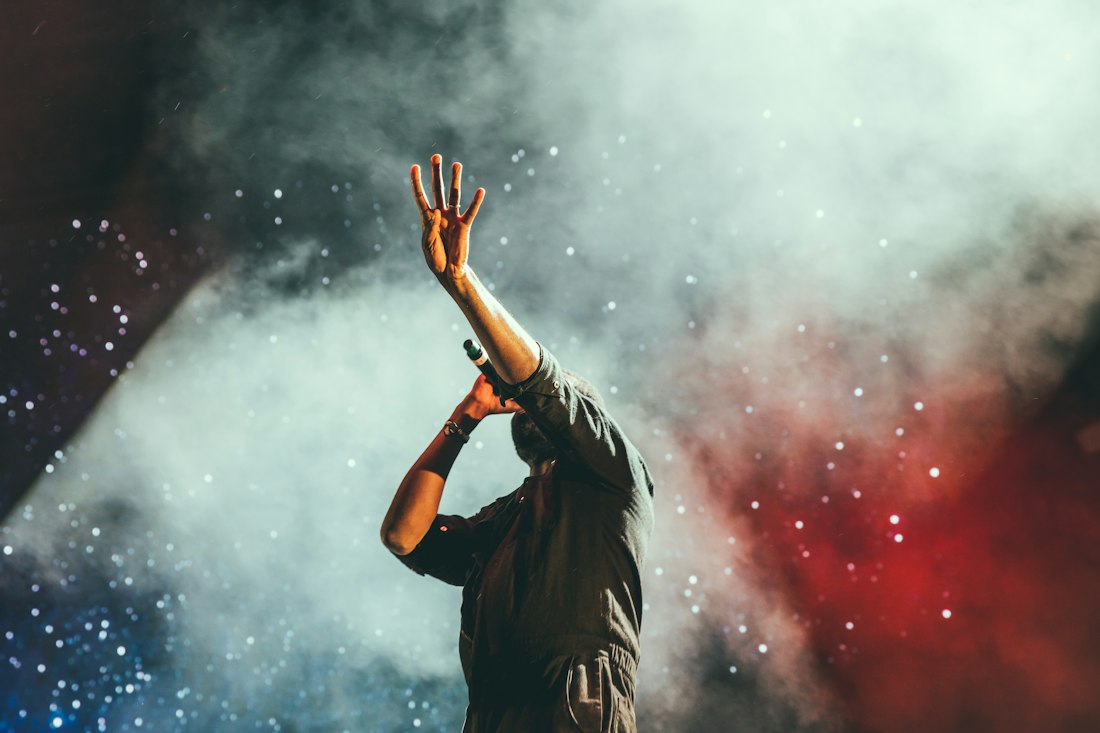
Music generation models predict rhythm, melody, and instrumentation simultaneously rather than one note at a time.
How Full Song Generation Works
Tools like Suno and Udio generate complete songs, including vocals, lyrics, and instrumentation, from a short text prompt describing genre, mood, and theme. These models are trained on enormous libraries of music paired with metadata and, in some cases, lyrics, learning statistical relationships between descriptive language and musical structure: how a "melancholic acoustic ballad" tends to differ from an "upbeat synth-pop track" in tempo, instrumentation, and vocal delivery.
Generation typically works similarly to audio diffusion more broadly: starting from noise and iteratively refining it into a coherent audio waveform (or an intermediate representation like a spectrogram) guided by the prompt at each step, while a separate component often handles generating matching lyrics if the tool includes vocals. The result is a genuinely novel composition rather than a recombination of existing songs, though it's built entirely from patterns the model absorbed from real music during training.
Generating Sound That Isn't Speech or Music
Sound effect generation covers a different category again: footsteps, rain, a door creaking, a crowd murmuring, an explosion. These models are trained on large libraries of labeled sound effects and environmental audio, learning to associate descriptive text with the acoustic textures of real-world sounds rather than the melodic or linguistic structure that music and speech generation rely on. Tools like AudioX use a unified diffusion transformer architecture capable of generating from multiple input types (text, video, or even existing audio) rather than text prompts alone, which is useful for a filmmaker who wants sound effects generated to match a specific video clip rather than described purely in words.
This is one of the more practically useful corners of AI audio generation for independent creators, since sound design has traditionally required either recording original foley (footsteps, cloth rustling, and similar everyday sounds recorded specifically for film and games) or licensing from sound effect libraries. Generated sound effects won't fully replace either for high-end professional work, but they've become a genuinely useful option for quick prototyping, indie game development, and content where budget or timeline doesn't support traditional sound design.
Where This Technology Gets Used Today
Audiobook and podcast production has adopted text-to-speech and voice cloning for narration, dubbing, and even resurrecting a narrator's earlier recording sessions to patch small corrections without a new studio visit. Video game studios use AI-generated dialogue and sound effects during early development for placeholder audio that would otherwise require costly voice actor sessions before a game's design is finalized. Marketing and content teams use music generation tools to produce royalty-free background tracks and intro jingles without commissioning original compositions, particularly for short-form social content where licensing existing music is often legally complicated.
Accessibility is a less publicized but genuinely significant use case: text-to-speech has existed for decades, but the quality leap from robotic older systems to natural-sounding modern AI voices has made screen readers, audiobook narration for visually impaired users, and voice output for people who can't speak due to illness or injury dramatically more pleasant and usable than the mechanical voices many people associate with the technology from years past.
Consent, Cloning, and Ongoing Disputes
Voice cloning raises sharper legal and ethical questions than music generation, since a cloned voice can be used to impersonate a real, identifiable person in ways that facilitate fraud, harassment, or reputational harm. A number of jurisdictions have moved to address this directly: several U.S. states have passed laws specifically targeting unauthorized AI voice cloning, particularly around political deepfakes and fraud, and similar legislative efforts are underway elsewhere. Reputable voice cloning tools generally require some form of consent verification before cloning a voice, though enforcement and coverage vary by platform and jurisdiction, and scam calls using cloned voices of family members have become common enough that several consumer protection agencies now publish specific guidance on recognizing and responding to them.
Music generation carries its own version of the training-data copyright dispute seen with image and video models: musicians and labels have raised concerns about models trained on copyrighted recordings without permission or compensation, and the legal questions around this remain unsettled in most countries as of 2026, similar to the broader pattern across generative AI. Several major music labels have pursued litigation against AI music companies over training data, while others have explored licensing deals instead, suggesting the industry hasn't settled on a single approach any more than courts have settled the underlying legal questions.
Frequently Asked Questions
How does AI music generation actually work?
Most AI music tools use a diffusion or transformer-based model trained on large amounts of audio paired with descriptions. The model learns statistical patterns connecting text descriptions to audio features like rhythm, melody, and timbre, then generates new audio by predicting and refining sound from noise, guided by the prompt.
How does AI voice cloning work?
Voice cloning models are trained on samples of a specific voice to learn its unique characteristics, such as pitch, tone, and speech patterns. Once trained, the model can generate new speech in that voice from text input, without the original speaker recording anything new.
Is it legal to clone someone's voice with AI?
It depends on jurisdiction and use case. Cloning a voice without consent for deceptive or harmful purposes, such as fraud or impersonation, is illegal in many places, and several countries and U.S. states have passed or proposed laws specifically addressing unauthorized AI voice cloning.
More Guides, Written Clearly
Browse our full library of AI explainers, updated as tools and techniques change.
More from the creator
Explore two other projects from the same creator.