AI Video Generation Explained: How Text Becomes Video
Type "a bustling Tokyo street at night, neon signs reflecting on wet pavement" into a tool like Google Veo or Runway, and within a minute you have a coherent, moving video clip — not just one image, but dozens of frames that stay consistent with each other. That consistency across time is the hard part, and it's what separates video generation from the image generators that came before it, and what makes the underlying technology worth actually understanding rather than treating as an unexplainable black box.

AI video generation has to solve a harder problem than still images: keeping every frame consistent with the ones around it.
Diffusion Plus Transformers, Working Together
Modern AI video generators, an architecture OpenAI's Sora was the first to popularize widely, combine two techniques that each solved a different half of the problem. Diffusion models, the same core technology behind AI image generators, handle turning random noise into coherent visual detail. Transformer architectures, the technology behind large language models like ChatGPT, handle keeping that visual detail consistent across time — tracking how objects move, occlude each other, and reappear from frame to frame, so a car driving past a building doesn't flicker or change appearance between shots.
Worth noting: OpenAI discontinued the consumer Sora app in April 2026 and its API in September 2026, citing the high compute cost of video generation relative to usage. That doesn't change the underlying architecture described below, which other tools including Google's Veo and Runway's Gen models continue to build on and refine.
How Video Is Actually Represented and Generated
Instead of treating a video as a sequence of separate still images, this generation of models represents video as spatio-temporal patches, small 3D blocks that span both space (a region of the frame) and time (a span of several frames). This is the key architectural idea that makes coherent video generation possible: by working with a unified representation of space and time together, rather than processing each frame independently, the transformer component can reason about how a patch of the video should evolve as time moves forward.
Latent compression
Raw video is compressed into a lower-dimensional latent representation first, making the enormous amount of visual data in a video computationally manageable.
Spacetime patches
The compressed video is broken into patches spanning both space and time, giving the model a unit it can generate and reason about consistently.
Transformer attention
A transformer processes these patches with attention mechanisms that track relationships between them, maintaining object permanence and motion consistency.
Diffusion denoising
The diffusion process fills in visual detail, starting from noise and iteratively refining it into a sharp, coherent result guided by the prompt.
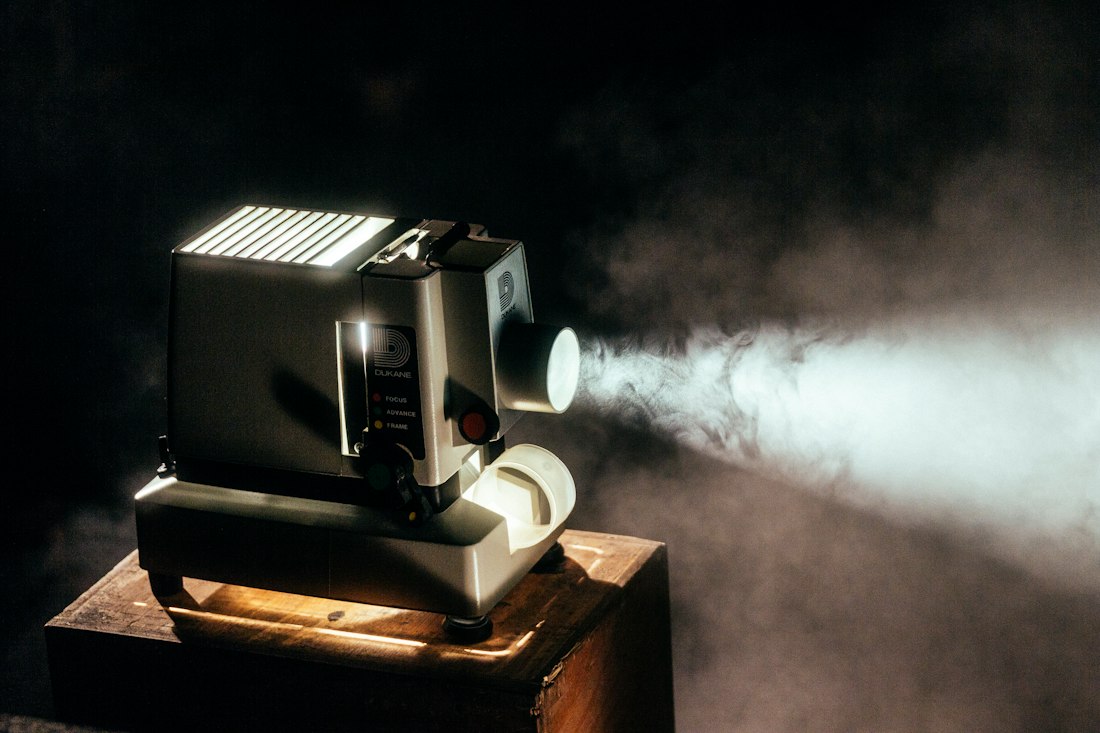
Complex scenes with multiple moving objects remain among the hardest cases for current video generation models to render believably.
What Happens to Your Prompt
Before generation even starts, most tools run your prompt through a language model that expands and enriches it, adding detail the model can use to build a more specific scene, similar to the recaptioning approach used in some image generators. This is why a short, simple prompt often produces a surprisingly detailed video: the system is filling in plausible specifics behind the scenes based on patterns from its training data, not because you were unusually descriptive.
The enriched prompt then guides the diffusion process at every denoising step, the same way a text-to-image model's prompt does, except now it has to remain consistent across every patch in both space and time simultaneously. This is computationally far more demanding than generating a single image, which is part of why video generation arrived years after image generation matured, and why longer, more complex videos remain significantly more expensive and slower to generate than short simple ones.
What People Actually Use This For
Beyond novelty demos, AI video generation has found practical footholds in a handful of areas. Marketing and advertising teams use it to quickly prototype concepts before committing to expensive live-action shoots, testing several visual directions for a campaign in an afternoon rather than over weeks. Filmmakers and animators use it for previsualization, roughing out a scene's camera movement and composition before real production begins, which is a very different bar than needing the final generated footage to appear in the finished product.
Independent creators and small businesses without video production budgets have started using these tools to produce short promotional clips, social media content, and simple explainer visuals that would otherwise require hiring a videographer or animator. Extending existing footage, filling in missing frames, and generating video from a single still image by inferring plausible motion are also increasingly common uses, often layered into video editing software as an assistive feature rather than a standalone generation tool. Game developers and virtual reality studios have also begun exploring these models for rapidly prototyping environment concepts, though production-ready game assets still typically require traditional 3D modeling rather than generated video.
Training Data and Ongoing Legal Disputes
Like AI image generators, video generation models are trained on enormous datasets of video and image content, much of it scraped from the public web, and the same unresolved copyright questions that surround image models apply here too, often with higher stakes given how much footage a training set requires. Filmmakers, actors, and studios have raised concerns both about training on copyrighted footage without permission and about the potential for generating video that too closely resembles a specific person's likeness or a copyrighted character without authorization.
Several jurisdictions are actively developing legal frameworks specifically addressing AI-generated likeness and deepfake concerns, separate from the broader training-data copyright question, since video adds a dimension of risk (impersonation, fabricated events) that static images raise less acutely. As with image generation, there's no single settled global answer as of 2026, and the rules that do exist vary meaningfully by country and are still evolving.
Physics, Consistency, and Other Failure Points
These models learn statistical patterns from training footage rather than an explicit understanding of physics, which is why certain scenes reliably produce visible errors. Complex interactions between multiple objects, unusual or fast motion, and scenes requiring precise cause-and-effect (a glass breaking, water splashing realistically) are common trouble spots where objects can flicker, merge, deform, or briefly violate expected physical behavior in ways a careful viewer will notice on a second watch.
Consistency over longer durations is the other major limitation. Current models handle short clips, typically a few seconds to under a minute, far more reliably than longer ones, since maintaining coherent object identity, lighting, and motion becomes exponentially harder to sustain the longer a generation runs. This is why most practical use of these tools in 2026 still centers on short clips rather than full scenes, even though the underlying trend has been steadily toward longer, more reliable output each year.
Faces and hands, already a known weak point for still image generators, carry over as a challenge in video, compounded by the need to keep them consistent across every frame rather than getting them right just once. A face that looks correct in one frame but subtly shifts proportions a few frames later is a distinctly video-specific failure mode that doesn't have a direct equivalent in static image generation, and it's one of the more reliable tells for spotting AI-generated video footage even as the technology continues to improve.
Frequently Asked Questions
How does AI video generation actually work?
Most modern tools, following the architecture OpenAI's Sora popularized, combine diffusion models with transformer architectures. The video starts as random noise represented in small spatio-temporal patches spanning space and time, and a transformer-guided diffusion process gradually denoises those patches into coherent, moving frames guided by the text prompt.
Why do AI-generated videos sometimes look physically wrong?
AI video models learn statistical patterns from training footage rather than an explicit model of physics. Complex interactions, unusual motion, or scenes with many moving objects are common failure points where objects can flicker, morph, or violate expected physical behavior.
How long can AI-generated videos be?
As of 2026, most tools reliably generate clips in the range of a few seconds up to about a minute at high quality. Generating longer, fully coherent video remains substantially harder than short clips due to the computational cost and difficulty of maintaining consistency over time.
More Guides, Written Clearly
Browse our full library of AI explainers, updated as tools and techniques change.
More from the creator
Explore two other projects from the same creator.