Is AI Voice Cloning Legal? Where the Law Actually Stands in 2026
A voice can now be convincingly cloned in about three seconds. The law protecting that voice hasn't kept pace — which is exactly why more than 80 UK actors just launched a campaign demanding legal ownership of their own voices, while a federal bill inches through the US Senate. Here's what's actually legal, what isn't, and where the rules stand right now.
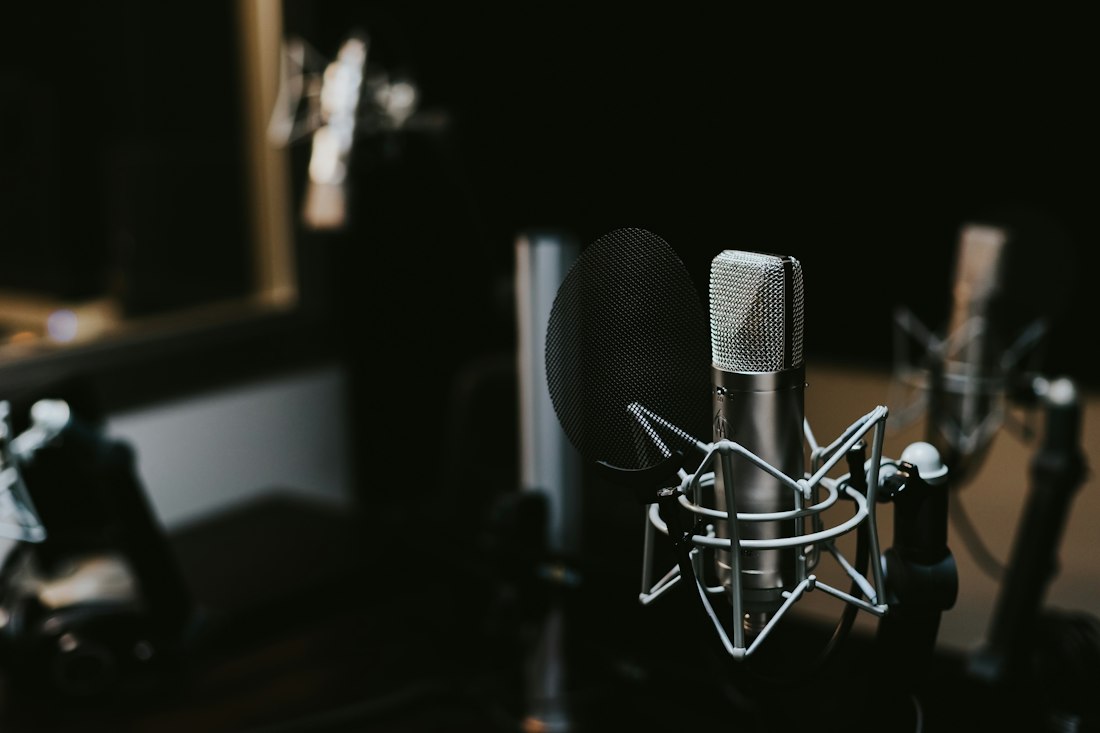
A voice can now be cloned convincingly from just a few seconds of audio, far outpacing existing legal protections.
Legal for Your Own Voice, Risky for Anyone Else's
The core rule, as of 2026, is fairly simple even though the legal patchwork underneath it isn't: cloning your own voice is unambiguously legal. Cloning someone else's voice without their documented consent is legally risky nearly everywhere and outright illegal in a growing number of jurisdictions — especially for commercial use, deceptive impersonation, or fraud. What's missing is a single, comprehensive federal law in the US covering the whole picture, which is why protection currently comes from a mix of state right-of-publicity statutes, FTC deception rules, copyright law (which protects a specific recording, not the voice itself), and individual platform policies.
That gap is exactly what's driving the current wave of legislative pressure. Tennessee's ELVIS Act, passed in 2024, was the first state law to explicitly treat a voice as a protected property right. California, Illinois, and New York have advanced or enacted their own digital-replica legislation since. At the federal level, the NO FAKES Act — the Nurture Originals, Foster Art, and Keep Entertainment Safe Act — would create the first nationwide intellectual property right in a person's voice and visual likeness, but as of this writing it has cleared committee, not the full Congress.
Why 80+ Actors Just Went Public

The Save Our Voices Now campaign has sent an open letter to the UK Prime Minister and launched a government petition for statutory voice rights.
In August 2026, more than 80 UK performers — including Nicola Coughlan, Hugh Bonneville, Matt Lucas, Luke Evans, and Siobhán McSweeney — launched the Save Our Voices Now campaign, sending an open letter to Prime Minister Andy Burnham and a formal government petition demanding that voice ownership become a statutory right, similar to how a person's name or image can already carry legal protection. Bonneville, known for Paddington, framed it plainly: "My voice is unique, it's mine, it's part of my identity. So is yours. That's worth speaking up about." Campaign founder Peter Caulfield was blunter still: "In just three seconds, with the right AI system, your voice can be cloned, stolen and reinterpreted without your knowledge."
The campaign explicitly points to Denmark as a model — the country has passed legislation granting citizens legal ownership over their face, body, and voice, letting people demand removal of unauthorized AI-generated content and seek compensation when it's used without consent. Currently, the UK has no equivalent statutory right; performers there are largely left relying on passing-off claims and contract law, both poor fits for a technology that can generate convincing fakes with no direct copying involved.
Where Things Actually Stand, Country by Country
| Jurisdiction | Status |
|---|---|
| United States (federal) | No comprehensive law yet; NO FAKES Act advanced through Senate committee June 2026, not yet passed |
| Tennessee | ELVIS Act (2024) — treats voice as a protected property right |
| California, Illinois, New York | Enacted or advancing state-level digital replica legislation |
| United Kingdom | No statutory voice right; Save Our Voices Now campaigning for one as of August 2026 |
| Denmark | Legal reforms grant citizens ownership over face, body, and voice |
| European Union | EU AI Act requires disclosure when synthetic audio could be mistaken for a real person |
The overall pattern is consistent across jurisdictions: courts and lawmakers increasingly treat voice as a form of biometric identity worth protecting, not just a creative recording covered by ordinary copyright. But the actual mechanisms — property right, publicity right, consumer protection law, criminal fraud statute — vary enough that what's clearly illegal in Tennessee may sit in a genuine gray area in a state or country without an equivalent law.
What This Means If You Create or Use Voice AI
- Cloning your own voice for your own content
- Using a fully synthetic voice not modeled on any real person
- Cloning a voice with clear, documented, written consent covering the specific use
- Clearly labeled parody, in jurisdictions that recognize fair-use style exceptions
- Cloning a celebrity, politician, or another creator without their explicit written consent
- Generating fake endorsements ("Person X said your product is great")
- Using a cloned voice for political or election-related content, even labeled as satire
- Any use designed to deceive, defraud, or impersonate someone for financial gain
If you're a creator considering voice cloning, get written, specific consent covering the scope, channel, and duration of use — a verbal okay isn't enough if it's ever challenged. And if you're worried about your own voice being cloned without consent, most major platforms including YouTube now let you request removal of AI-generated content that simulates your face or voice, even without a settled law behind you yet.
How Cloned Voices Actually Get Caught
As voice cloning has become harder to detect by ear alone, a parallel detection industry has grown around identifying synthetic audio through means listeners can't reliably use themselves. Audio forensic tools look for artifacts that don't show up in natural human speech — unnaturally consistent breathing patterns (or their complete absence), spectral characteristics in the frequency range that differ subtly from organic vocal cords, and inconsistencies in background noise that a real recording environment would naturally produce but a synthesized clip often doesn't reproduce convincingly. Several platforms and financial institutions have started deploying this kind of detection specifically for voice-based authentication and fraud prevention, treating it as a necessary countermeasure now that voice alone can no longer reliably confirm someone's identity over the phone.
For individuals without access to forensic tools, the more practical defense is procedural rather than technical: treating any urgent, high-stakes phone request — a family member asking for money, a supposed executive requesting an unusual wire transfer — with the same skepticism you'd apply to a suspicious email, regardless of how convincing the voice sounds. Establishing a verbal code word or a call-back verification habit with close family members, a practice security experts have increasingly recommended since consumer-grade voice cloning became widely accessible, is one of the few defenses that doesn't depend on being able to detect a fake by ear.
Frequently Asked Questions
Is it legal to clone someone's voice with AI?
Cloning your own voice is legal. Cloning someone else's voice without consent is legally risky nearly everywhere, and outright illegal in a growing number of jurisdictions, especially for commercial use or impersonation. There's no comprehensive US federal law yet, so protection currently comes from a patchwork of state right-of-publicity laws, FTC rules against deception, and platform policies.
What is the NO FAKES Act?
The NO FAKES Act is a proposed US federal law that would create the first nationwide intellectual property right in a person's voice and visual likeness, covering both living and deceased individuals. The Senate Judiciary Committee unanimously advanced it on June 18, 2026, but it has not yet passed the full Senate or House, so it is not law as of this writing.
Why are UK actors campaigning for new voice cloning laws?
More than 80 UK performers, including Nicola Coughlan and Hugh Bonneville, launched the Save Our Voices Now campaign in August 2026, because the UK currently has no statutory right to voice ownership. The campaign is asking the government to make voice a protected legal identity right, similar to Denmark's recent legal reforms covering face, body, and voice.
More AI Policy Guides, Written Clearly
Browse our full library of AI explainers, updated as laws and regulations change.
More from the creator
Explore two other projects from the same creator.