Creatine for the Brain: The Research Moved Faster Than the Marketing
Creatine spent decades as a gym-bag supplement, backed by some of the most solid sports science evidence around. In 2026, that same molecule started showing up in a completely different kind of research — trials on memory, sleep-deprived cognition, and even early Alzheimer's disease. The interest is legitimate, but so is the caveat researchers keep repeating: the human evidence is still early, mixed, and built on smaller studies than creatine's muscle-building reputation would suggest. Here's what's actually been found, and who it's most likely to help.
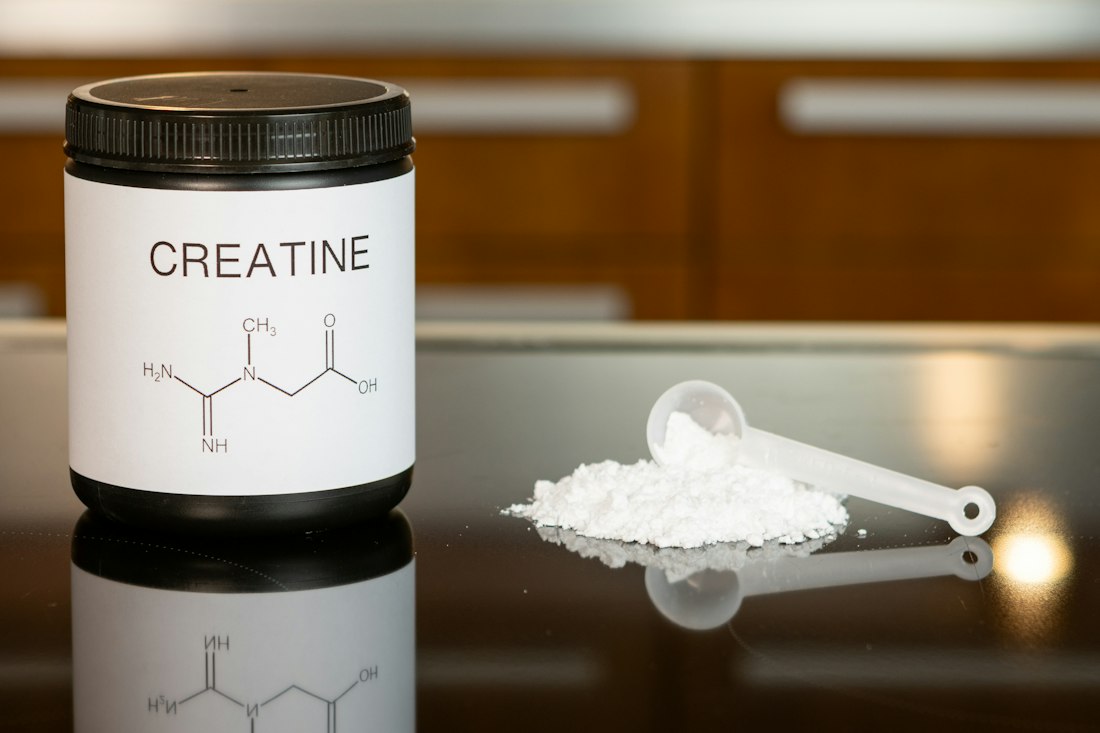
Creatine is one of the most-studied sports supplements — the newer question is whether the same molecule that helps muscles also helps the brain.
The Brain Runs on the Same Energy System as Muscle
Creatine's role in the body starts with energy, not muscle specifically. In cells that need quick bursts of energy, creatine combines with a phosphate group to form phosphocreatine — a fast-release reserve that helps regenerate ATP, the molecule cells actually run on. Muscle tissue relies on this system heavily, which is why creatine became a strength and power supplement in the first place. But the brain uses a strikingly large share of the body's total energy for its size, and it turns out it relies on a similar phosphocreatine system to meet that demand, particularly during periods of metabolic stress like sleep deprivation or aging-related decline.
That shared mechanism is the basis for the hypothesis now being tested in brain research: if creatine can buffer energy availability in muscle during hard efforts, it might do something similar for brain cells during cognitively demanding or metabolically stressed states. It's a reasonable hypothesis grounded in real biology — but a hypothesis is not the same thing as a proven clinical benefit, and 2026 researchers reviewing the field have been explicit about that distinction.
Promising, Specific, and Still Early

Older adults are one of the groups where 2026 research has found the most consistent, if still modest, cognitive benefits from creatine.
A 2026 systematic review focused on older adults found limited but encouraging evidence for cognitive benefits, particularly around memory and attention, while explicitly calling for higher-quality clinical trials before drawing firmer conclusions. A separate 2026 study looked at a different kind of stress entirely: 29 sleep-deprived but otherwise healthy adults given a weight-based dose of creatine monohydrate showed up to a 12% improvement in the cognitive decline typically caused by sleep deprivation, with the effect notably stronger in women than men — a difference researchers attributed to women's generally lower baseline creatine stores.
The most striking, if most preliminary, findings come from Alzheimer's research. A pilot trial in 20 patients found that 8 weeks of high-dose creatine supplementation (20g daily) was associated with improved total cognition, working memory, and a measured 11% increase in brain creatine concentration. Researchers were careful to flag the limits of that finding: it was a single-arm study without a placebo control group, and a short follow-up period, so it counts as encouraging early evidence rather than proof the intervention works.
Older Adults
2026 review found limited but encouraging evidence for memory and attention benefits — one of the more consistent findings so far.
Sleep-Deprived Adults
Up to 12% improvement in cognitive performance measures in a small 2026 trial, with a larger effect in women.
Alzheimer's Patients
Encouraging pilot data on cognition and brain creatine levels, but from a small, uncontrolled trial that needs replication.
Young, Healthy Adults
The weakest evidence category — most researchers say creatine isn't yet supported as a general nootropic for this group.
This Isn't a Universal Brain Boost
- Vegetarians and vegans, who get less dietary creatine from meat and fish and tend to have lower baseline stores
- Older adults, where several trials show modest but real cognitive gains
- People dealing with sleep loss or mental fatigue, based on the sleep-deprivation trial data
- Anyone with impaired brain energy metabolism from a diagnosed condition, under medical supervision
- Young, well-rested, healthy adults — the group with the least evidence of a measurable cognitive benefit
- Anyone expecting a fast, dramatic effect — the studied benefits are modest and take weeks to show up
- Using it as a substitute for sleep, exercise, or a balanced diet, which remain the best-supported foundations of brain health
- High-dose, unsupervised use modeled on the Alzheimer's pilot trial dosing without medical guidance
A 2026 commentary published in Frontiers in Nutrition also raised a technical concern worth knowing about: a widely cited meta-analysis concluding creatine improves cognitive performance in adults was found to contain a statistical error, treating multiple correlated outcomes from the same participants as if they were independent data points — a mistake that can make an effect look stronger than it really is. That kind of correction is a normal part of how science self-polices, but it's also a useful reminder to treat any single "creatine boosts your brain" headline with some skepticism until the underlying numbers hold up to scrutiny.
Is Creatine Worth Taking for Brain Health?
Reasonable to consider for specific groups — not yet a proven nootropic for everyone.
The honest 2026 read on creatine and the brain is that it's a legitimately interesting research direction with some real, if modest, supporting data — particularly for older adults, people under sleep-related cognitive stress, and those with lower baseline creatine stores. It is not yet established science the way creatine's muscle-building effects are, and researchers are actively working to fix methodological issues in the existing literature. If you're already taking creatine for its well-proven exercise benefits, a possible brain-health upside is a reasonable bonus to be aware of — just not the reason to start.
Frequently Asked Questions
Does creatine actually improve brain function?
The evidence is real but still early. A 2026 systematic review in older adults found limited but encouraging evidence for benefits in memory and attention, and a 2026 study in sleep-deprived adults found up to a 12% improvement in cognitive performance with supplementation. Researchers describe the effect as biologically plausible and promising in specific circumstances, not yet proven for healthy adults generally.
Who is most likely to benefit from creatine for brain health?
People with lower baseline dietary creatine intake, including vegetarians and vegans, are considered plausible candidates for benefit. Older adults and people dealing with sleep loss, mental fatigue, or impaired brain energy metabolism also appear more likely to see an effect than young, well-rested adults, according to 2026 research reviews.
What dose of creatine is used in brain health studies?
Doses vary by study. Standard maintenance doses of around 5g daily have been used in trials on aging and cognition, while some sleep-deprivation studies used a weight-based dose of 0.2g per kg of body weight, and Alzheimer's pilot trials have used considerably higher amounts, around 20g daily. There is no single agreed-upon dose specifically for brain health outside of clinical trial settings.
More Health Guides, Written Clearly
Browse our full library of health explainers, updated as new research comes in.
More from the creator
Explore two other projects from the same creator.