Physical AI Explained: Why Robots Need Different Models From Chatbots
Chatbots can write a poem about a coffee cup. They cannot pick one up. The gap between those two abilities is the subject of physical AI, a term now used by NVIDIA, XPeng, and much of the robotics industry for AI that perceives, reasons about, and acts in the physical world. This guide explains what makes it different from the chatbots you know, and why that difference is hard.
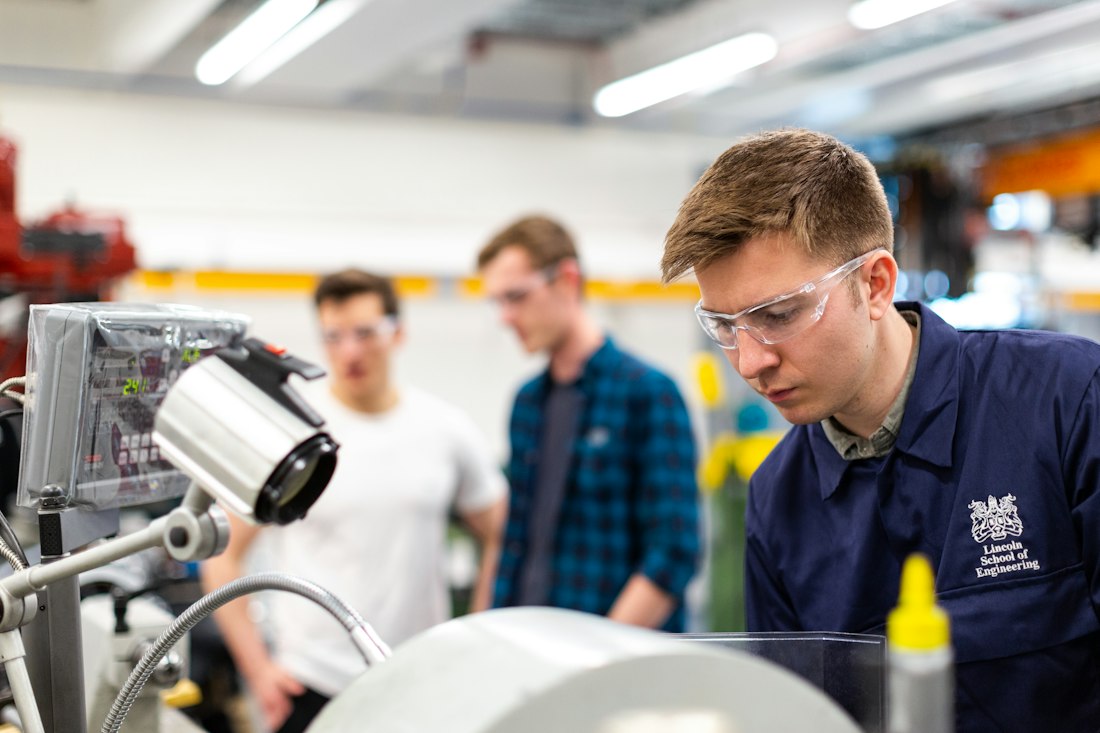
Physical AI has to reason about space, objects, and force, not just words.
What Is Physical AI?
Physical AI is artificial intelligence that senses the physical world and acts on it: robots, self-driving vehicles, drones, and industrial machines. Where a chatbot produces words on a screen, physical AI produces motion in the real world, and that changes everything about how the models are built, trained, and tested.
The term has gone mainstream in 2026. NVIDIA’s CEO said at the launch of Cosmos 3 that the big bang of physical AI is just around the corner. XPeng now calls itself a physical AI company, spanning chips, models, cars, and robots. Whether the timeline is right is debatable, but the underlying technical problem is real, and it is why you cannot simply plug a chatbot into a robot body.
For a closer look at one application, humanoid robots, see our humanoid brains guide.
Why Can’t a Chatbot Just Control a Robot?

World models simulate physical scenes on large clusters before robots ever move.
| Gap | Chatbot AI | Physical AI |
|---|---|---|
| Consequences | A bad answer wastes time | A bad action can break things or hurt someone |
| Speed | Seconds are fine | Control loops need milliseconds |
| Grounding | Words and patterns | Space, physics, contact, and force |
| Data | The internet is full of text | Robot action data is scarce and expensive |
| Reliability | Occasional errors are tolerable | Errors must be extremely rare and safe |
Each gap forces different engineering. Consequences demand safety layers. Speed demands onboard computing, a reason XPeng’s robot carries powerful chips rather than relying on a connection. Grounding demands models that understand three-dimensional scenes. Data scarcity demands simulation. And reliability demands testing that is much more rigorous than checking whether a chatbot sounds fluent.
What Is a World Model?
A world model predicts what will happen next in a physical scene. Given what a robot sees and an action it might take, it estimates the result: the cup slides, the door swings, the box tips. That lets a system imagine before it acts, and lets developers generate huge amounts of practice data without a real robot.
NVIDIA’s Cosmos 3, launched at GTC Taipei on May 31 and June 1, 2026, is an example. NVIDIA calls it the first fully open omnimodel that can understand and generate text, images, video, ambient sound, and actions, built on a mixture-of-transformers architecture that combines vision reasoning, world generation, and action prediction in one system. NVIDIA says it reduces physical AI training and evaluation cycles from months to days, which is a company claim worth watching in independent tests.
The important idea is the merger. Earlier systems used separate tools for understanding, simulation, and control. Combining them, if it works as advertised, shortens the loop between imagining, testing, and acting.
Where Does Physical AI Get Its Training Data?

Robots need fast onboard chips because a control loop cannot wait for a server.
Real robot demonstrations
Highest quality, lowest quantity. Humans operate robots to record how tasks are done.
Simulation
Virtual environments let thousands of robots practice in parallel, safely and cheaply.
Generated video and scenes
World models create varied situations, such as changed lighting or weather, to make policies more reliable.
Fleet data
Deployed robots and vehicles generate real-world experience that improves later versions.
The recurring risk is the sim-to-real gap: a policy that works perfectly in simulation can fail on the first real object because friction, lighting, or sensor noise differ. Closing that gap is a large part of the field’s work, and it is why real-world deployments, even modest ones, are so valuable. Amazon’s warehouses, discussed in our warehouse robots guide, are a huge source of that kind of experience.
Is Self-Driving Also Physical AI?
Yes, and it is the most deployed form. A self-driving system senses roads, predicts what other drivers and pedestrians will do, and controls a vehicle in real time. It faces the same five gaps as a robot, which is why the same companies increasingly work across both. XPeng’s regulatory filings describe its November 2025 AI Day as spanning a vision-language-action model called VLA 2.0, a robotaxi platform, its IRON humanoid, and a flying car system, all under the physical AI banner.
The takeaway is that physical AI is a category of problem, not a single product. Cars, robots, drones, and factory machines share one need: models that can perceive, predict, and act safely in an unpredictable world.
Which Physical AI Models Are Available?
Open releases are lowering the barrier. NVIDIA released Isaac GR00T N1 in March 2025 as an open foundation model for humanoid reasoning and skills, and in 2026 previewed GR00T N2, which it says helps robots succeed at new tasks in new environments more than twice as often as leading vision-language-action models on its measures, with availability targeted for the end of the year. Cosmos 3 is offered in open variants on Hugging Face.
Open weights matter because they let smaller companies and researchers build robots without training a foundation model from scratch. They also let independent groups check the claims. As with language models, the gap between open and closed systems shapes who can compete, a theme we cover for chatbots in open-source versus closed AI models.
Why Is Safety a Bigger Deal Than in Chatbots?
Do some quick arithmetic. If a robot makes a thousand decisions an hour and gets each one right 99.9 percent of the time, it still makes about one mistake every hour. A chatbot can shrug that off. A machine that lifts, moves, or drives cannot. Physical AI needs failure rates that are orders of magnitude lower, plus fallbacks that keep errors from becoming accidents.
That is why the field leans on layered defenses: rule-based safety systems that override the model, force and speed limits, extensive simulation of rare events, and human supervision in early deployments. It is also why regulators and insurers, not just engineers, will shape how fast robots spread. The same caution runs through our coverage of software agents in how AI agents can be tricked.
Do Chatbots and Language Models Still Play a Role?
Absolutely. Language models are the part of a robot that understands instructions and reasons about goals. Google DeepMind’s Gemini Robotics builds its robot models on top of Gemini, and NVIDIA’s Cosmos 3 combines language, vision, and action in one system. Physical AI extends chatbot technology rather than replacing it.
The difference is that language becomes one input among several. The model must also process video, depth, touch, and the robot’s own body state, and it must output actions on a strict schedule. If you want the plain-language version of what these underlying models are, start with what is an AI foundation model.
What Does Physical AI Mean for You in Practice?
- Smarter warehouse and factory robots
- Better driver-assistance and autonomous vehicle features
- Faster robot development thanks to simulation and open models
- Robots that adapt to small changes in structured settings
- General-purpose home robots that handle any chore
- Robots that reliably learn new tasks from a single instruction
- Fully autonomous humanoid workforces
- Trusting a robot in an unpredictable crowd without supervision
Expect the impact to arrive in places where the environment is controlled and the value is clear. If you want to understand how the same ideas shrink into consumer devices, our on-device versus cloud AI guide explains the local-versus-remote tradeoff that robots face in an extreme form.
How Do You Test Whether a Physical AI System Works?
Testing is harder than for chatbots, because you cannot simply run a thousand prompts. Developers combine three approaches: simulation to test rare and dangerous situations cheaply, benchmarks that compare policies on standard tasks, and real-world trials with people supervising. NVIDIA, for instance, says its GR00T N2 ranks first on two public generalist-robot benchmarks, MolmoSpaces and RoboArena, a claim worth checking against independent results as they appear.
The most convincing evidence is dull: long deployments with clear numbers on how often the system succeeds, how often a human has to step in, and what happens when it fails. When a company shows only highlight clips, treat that as a signal to ask for the rest.
What Do the Common Terms Mean?
VLA
A vision-language-action model: images and instructions in, robot actions out.
World model
A model that predicts how a physical scene changes after an action.
Sim-to-real gap
The drop in performance when a policy trained in simulation meets the real world.
Embodiment
The physical body a model controls. Different bodies need different skills, which is why cross-embodiment models are a research priority.
These terms overlap and will keep evolving. What matters is the underlying question each answers: what does the machine see, what does it expect will happen, and what does it do about it?
Frequently Asked Questions
What is physical AI?
Physical AI is artificial intelligence that perceives and acts in the real world, powering robots, autonomous vehicles, drones, and industrial machines, as opposed to AI that only produces text or images.
Why can’t chatbots control robots?
Robots need real-time control, an understanding of physics and space, extremely high reliability, and safe behavior. Chatbots are trained on text and are too slow and unreliable for that job.
What is NVIDIA Cosmos 3?
It is an open world foundation model NVIDIA released on May 31, 2026. NVIDIA says it understands and generates text, images, video, sound, and actions to speed up physical AI development.
What is a world model?
A world model predicts how a physical scene will change in response to actions, letting robots and developers simulate outcomes before acting.
More AI Tool Guides, Written Clearly
Browse our full library of AI explainers, updated as the tools and hardware change.
More from the creator
Explore two other projects from the same creator.