Why AI Search Results Sometimes Get Facts Wrong
AI-generated search answers can sound completely confident while being completely incorrect — a well-formed sentence, a plausible-looking citation, a fact that simply isn't true. This isn't a rare glitch; it's a known, measured, and named failure mode called hallucination, and understanding why it happens helps explain when to trust an AI answer and when to double-check it.
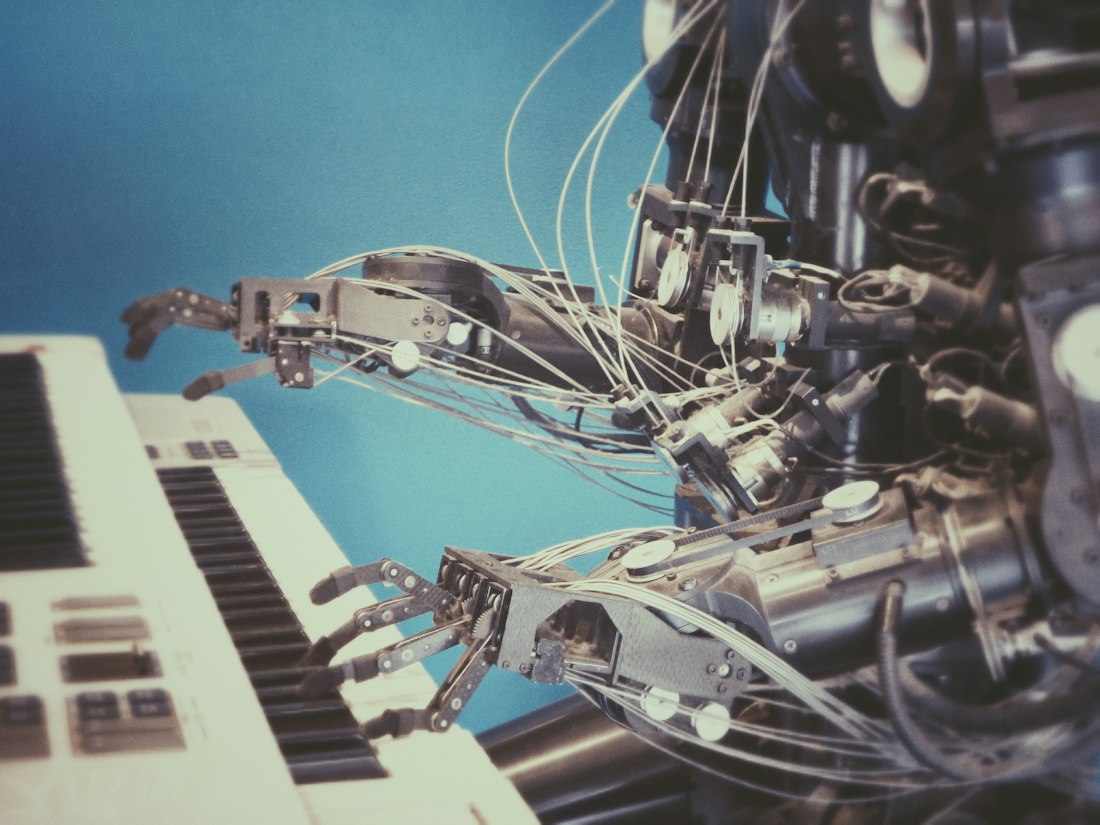
A confident tone and a correct answer are not the same thing — AI models can produce both, or just one.
The Model Is Predicting Plausible Text, Not Looking Up Guaranteed Facts
AI language models generate responses by predicting the most statistically plausible next words based on patterns learned during training, not by querying a guaranteed-accurate database of facts. Most of the time this produces correct, useful answers, because most factual claims a model encounters are well-represented and consistent in its training data. But when a topic is thin, contradictory, or genuinely uncertain, the model can still generate a fluent, confident-sounding sentence — it just may not be a true one. This failure mode is widely known as hallucination.
A particularly well-studied version of this is citation hallucination: a model invents a source that doesn't exist, or attributes a real claim to the wrong source entirely. One 2026 analysis of 2.2 million AI-generated citations across academic contexts found hallucination rates ranging from about 14% to 95% depending on the specific model tested — a wide enough range that which model answered a question matters a great deal.
Live Search Access Cuts Errors Dramatically
The single most effective way to reduce hallucination isn't clever prompting — it's giving the model something real to check its answer against. OpenAI's own evaluations found that enabling live web search access reduced hallucination rates by 73-86% compared to the same model answering purely from memorized training data. Separate 2026 benchmarking work reached a similar conclusion: retrieval grounding was the most effective mitigation available, far ahead of prompt-based approaches, which capped out around a 15% reduction on their own.
This is part of why an AI search answer that actively retrieves and cites live web pages tends to be meaningfully more reliable than an unsupported claim from a chatbot with search turned off — though "meaningfully more reliable" is not the same as "guaranteed accurate." Even retrieval-grounded systems still hallucinate sometimes, just at a lower rate.
Recency and Niche Topics Are the Highest-Risk Zone

The freshest and most obscure topics are consistently where AI answers are least reliable.
Research consistently finds hallucination rates rising sharply on niche or very recent topics — one study found rates jumping from 15-20% on general factual citation tasks to 35-55% on niche or recent subjects, and worse still in specialized domains like medicine and law where hallucination rates without grounding exceeded 28% in some evaluations. The underlying reason is straightforward: a model can only reflect patterns it has actually seen enough of, and both brand-new events and obscure topics are, by definition, thinly represented in whatever data the model was trained or given to retrieve from.
Well-established general knowledge
Lowest hallucination risk — heavily represented across training data and easy to verify against multiple sources.
Breaking news or very recent events
Higher risk — retrieval-enabled systems do better here than memory-only ones, but coverage can still be thin in the first hours or days.
Niche, specialized, or technical topics
Highest risk — thinner training data and fewer independent sources to cross-check against.
Frequently Asked Questions
Why do AI search results sometimes contain wrong information?
Models generate plausible text based on patterns rather than looking up guaranteed facts, so uncertain or thinly-represented topics can produce confident but incorrect answers.
How common are AI hallucinations?
Highly variable — one 2026 study found rates from 14% to 95% across 13 different models, depending heavily on the model and task.
Does web search reduce hallucinations?
Yes, significantly — OpenAI's evaluations found a 73-86% reduction when live search is enabled versus memory-only answers.
Are hallucination rates improving over time?
Top models cut rates by roughly 90-95% since 2024 on standard benchmarks, even as the raw volume of hallucinated content online has grown alongside AI content generally.
What topics are most likely to be wrong?
Niche, highly specialized, or very recent topics, where hallucination rates can climb to 35-55% even for otherwise capable models.
More AI Guides, Written Clearly
Browse our full library of AI explainers and how-tos, updated as the tools change.
More from the creator
Explore two other projects from the same creator.