How AI Search Summaries Change Website Traffic — By Industry
"AI search is hurting website traffic" is true for some sites and badly incomplete for others. A news site and an online shoe store experience almost opposite effects from the same underlying technology. Here's the traffic story broken down by the kind of website you actually run.
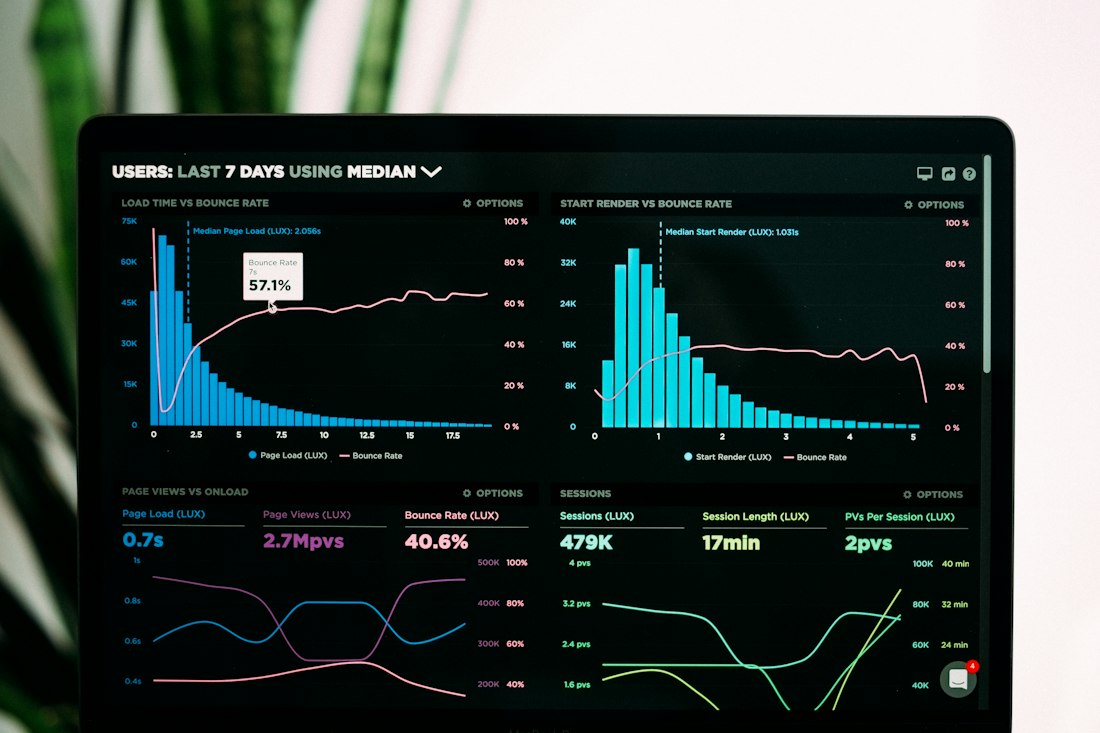
The same AI Overview technology produces very different outcomes depending on what kind of page it's summarizing.
Same Technology, Very Different Outcomes by Content Type
AI search summaries hit purely informational and news content the hardest in raw traffic terms, while leaving transactional, commercial, and product-driven pages comparatively intact — and in several studies, increasing conversion quality for the visitors those pages still receive. The dividing line isn't industry so much as intent: an AI Overview can fully answer "who won the game" or "what year did X happen" without sending a click anywhere. It can't complete a checkout, book an appointment, or close a B2B sales deal on your behalf.
The Hardest-Hit Segment

News content is exactly the format AI Overviews are built to summarize completely.
Press Gazette's 2026 analysis of major news publishers found Google search referral traffic down roughly a third year-over-year on average, with some individual outlets down 26–55%. The mechanism is straightforward: breaking news and explainer articles are largely factual, time-bound, and structured exactly the way an AI Overview needs content to be structured in order to summarize it fully. Even Wikipedia — cited more often in AI Overviews than any other domain — saw human pageviews fall 8%, arguably the cleanest demonstration available that being the most-trusted source doesn't protect a site from readers no longer needing to click through.
Lower Volume, Meaningfully Higher Conversion
Retail tells close to the opposite story. Shopify's 2026 commerce data found AI-referred sessions converting at nearly 50% higher rates than organic search on product pages, outperforming SEO in 23 of 25 merchant categories by an average of 56%, with 14% higher average order values layered on top. Adobe Analytics, drawing on more than a trillion visits across 130-plus North American retailers in Q1 2026, found AI-referred shoppers spending 48–53% more time on product pages and viewing 13–23% more pages per visit — signals of a shopper who arrives already interested rather than just browsing.
The volume of AI-referred retail traffic remains small in absolute terms (typically in the low single digits of total sessions), but it's growing quickly and behaving in a way that raw traffic-volume metrics undersell.
Fewer Visitors, Far Better Qualified
A study of 312 B2B technology firms found AI-referred visitors converting at 14.2% versus 2.8% for Google organic — roughly five times higher. The explanation researchers point to: B2B buying decisions typically involve extended research, and by the time someone asks an AI system to compare vendors, they've often already had several rounds of that research pre-answered before they ever land on a specific company's site. Whoever gets cited in that comparison is talking to a buyer who's much further along than a cold organic visitor typing a broad keyword into Google.
Comparatively Insulated — For Now
Local search intent
Queries with strong local or map intent still route through Google's local pack and Maps rather than AI Overviews for most searches, keeping this segment relatively stable so far.
Navigational searches
Typing a specific business or brand name to find its website remains largely untouched by AI Overviews, which appear far more often on open-ended informational queries.
Booking & scheduling
An AI summary can describe a service but can't check real-time availability or take a booking, so these pages still tend to need a click to complete the task.
Frequently Asked Questions
Which websites lose the most traffic to AI search summaries?
News publishers and purely informational sites, with Google referral traffic down roughly a third year-over-year on average for major publishers.
Do e-commerce sites lose traffic the same way?
No — Shopify's data found AI-referred sessions converting nearly 50% higher than organic search on product pages, since an AI summary generally can't complete a purchase.
Did Wikipedia lose traffic despite being the top cited source?
Yes, an 8% pageview decline, showing that being the most-cited source doesn't prevent readers from no longer clicking through.
How does this differ for B2B websites?
A 312-firm study found AI-referred B2B visitors converting roughly five times higher than Google organic visitors, since B2B research is often pre-answered by AI before a site visit.
Should every website expect the same impact?
No — impact tracks content type and intent, with informational content losing the most volume and transactional content seeing smaller volume shifts alongside higher conversion quality.
More AI Guides, Written Clearly
Browse our full library of AI explainers and how-tos, updated as the tools change.
More from the creator
Explore two other projects from the same creator.