GLP-1 Drugs and Muscle Loss: What Research Shows
One of the most consistent findings across GLP-1 research is one the ads don't mention: a meaningful share of the weight people lose on these drugs isn't fat, it's muscle. This isn't a rare side effect or a rumor. It's a documented pattern across nearly every major trial, and understanding it changes how you should approach treatment.
Yes, GLP-1 Drugs Cause Real Muscle Loss
Any time you lose weight quickly, whether from a GLP-1 drug, bariatric surgery, or aggressive dieting, some of that weight comes from lean tissue rather than fat. That's true of weight loss in general, but GLP-1 drugs appear to produce a somewhat higher proportion of lean mass loss than more gradual, diet-only weight loss, likely because the appetite suppression is strong enough that total protein intake often drops sharply too.
A 2026 case series in a peer-reviewed journal found that lean soft tissue loss made up 26% to 40% of total weight loss in patients on semaglutide or tirzepatide. Separately, an analysis of the semaglutide obesity trials found lean body mass declined by nearly 10% even though participants lost substantially more fat mass than muscle in absolute terms.
Tirzepatide vs Semaglutide: A Measurable Difference
A large 2026 study used electronic health records and AI-based extraction to track body composition in more than 670,000 first-time GLP-1 users, with a smaller subset of nearly 8,000 having paired before-and-after body composition scans. It found tirzepatide was associated with greater relative lean body mass loss than semaglutide at every measured time point, with the gap widening over the first year: 1.1 percentage points of excess loss at 3 months, rising to 2 percentage points by 12 months.
The same study identified a pattern it called a "depletive" metabotype, defined as losing more than 20% of total body weight alongside more than 5% lean mass loss. This pattern was notably more common with tirzepatide (10.3% of users) than semaglutide (6.7%), and it was more frequent in people who already had musculoskeletal pain or reduced exercise tolerance before starting treatment.
Why It Happens
There isn't one single mechanism, but the leading explanation is straightforward: when your appetite drops sharply, your total food and protein intake usually drop with it. Without enough protein to support muscle maintenance, and often without much physical activity to signal your body to keep the muscle it has, some proportion of the weight your body sheds during rapid loss will be lean tissue rather than fat.
Researchers examining GLP-1's separate effects on muscle and bone have noted that the mechanisms of weight-loss-induced muscle loss aren't fully understood, and that reduced physical loading from carrying less body weight may also play a role in accompanying bone density changes, an area still being actively studied.
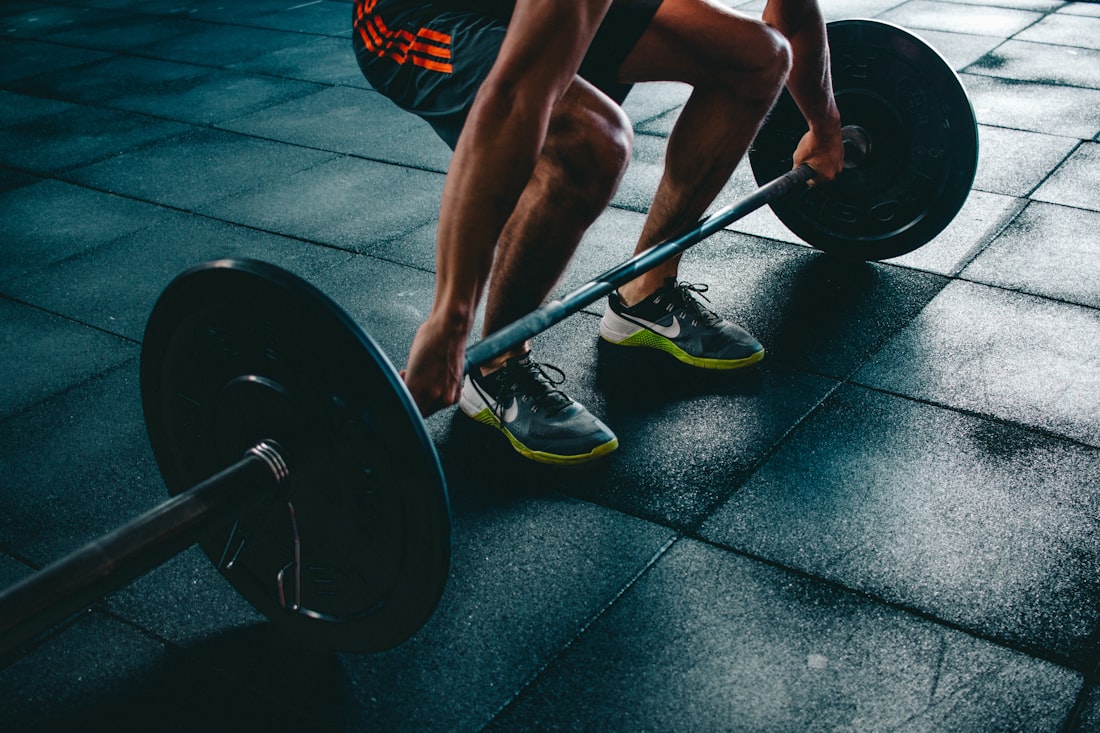
Resistance training is the intervention most consistently linked to preserving muscle during GLP-1 treatment.
What Actually Helps: The Evidence for Prevention
Two interventions have real evidence behind them, and the strongest results come from combining both.
Resistance Training
The S-LITE trial, published in the New England Journal of Medicine, randomized adults to liraglutide, exercise, both, or neither for a year. The combined group lost the most weight overall while losing the smallest fraction of it as lean mass, and multiple ongoing trials (FLEX, RESIST, EXER-MED) are specifically testing structured resistance programs alongside GLP-1 drugs.
Adequate Protein
Most clinical guidance points to roughly 1.2 to 1.6 grams of protein per kilogram of body weight daily during GLP-1 treatment, spread across meals in servings of about 25 to 40 grams, since appetite suppression makes it harder to hit protein targets in fewer, larger meals.
One small case series found that patients who combined structured exercise 4 to 7 days a week (including resistance training 3 to 5 days a week) with relatively high protein intake were able to preserve, and in two of three cases actually increase, their lean soft tissue while still losing substantial fat mass. For the full protein picture, see GLP-1 drugs and protein intake, and for the exercise side specifically, GLP-1 drugs and exercise.
Who Should Pay the Closest Attention
The 2026 phenotyping study found that people with pre-existing musculoskeletal pain, such as knee pain or neck pain, or reduced exercise tolerance before starting treatment, lost disproportionately more lean mass than others. If that describes your situation, it's worth discussing a proactive resistance-training and protein plan with your prescriber before you start, rather than after you notice strength declining.
Older adults and anyone with a smaller starting muscle mass also have less margin to lose, since muscle loss at any age is linked to reduced physical function, and losing it becomes progressively harder to reverse later in life.
Is This Different From Muscle Loss on a Regular Diet?
A common question is whether GLP-1 drugs are uniquely harmful to muscle compared to simply eating less through willpower alone. The honest answer is that some lean mass loss accompanies essentially any significant weight loss, whether from a GLP-1 drug, bariatric surgery, or a conventional calorie-restricted diet, and the underlying biology, your body drawing on multiple tissue types for energy when intake drops, doesn't fundamentally change based on why your appetite is lower.
What may differ is the speed and magnitude. Because GLP-1 drugs can suppress appetite more powerfully and consistently than willpower-based dieting typically achieves, some people lose weight faster on these medications than they would through diet alone, and faster weight loss in general tends to shed a higher proportion of lean mass than slower, more gradual loss. That's a reason to be deliberate about protein and resistance training, not a reason to conclude the drugs are doing something entirely different from other rapid weight-loss methods.
How to Actually Measure This Yourself
Most people relying only on a bathroom scale have no way of knowing what proportion of their weight loss is fat versus muscle. A few practical options exist at different levels of precision and cost. A DEXA scan, typically available through imaging centers or some medical practices, gives a precise breakdown of fat mass, lean mass, and bone density, and is the method used in most of the research cited above.
Bioelectrical impedance scales, including many consumer smart scales, offer a cheaper but noticeably less accurate estimate that can be thrown off by hydration status and time of day, so trends over many weeks matter more than any single reading. A simpler, low-cost proxy is tracking strength on a few basic resistance exercises over time. If your working weights on major lifts are holding steady or increasing while the scale goes down, that's a reasonable sign you're preserving functional muscle even without formal body composition testing.
What Doctors Actually Recommend
Clinical obesity medicine guidance increasingly frames GLP-1 treatment as something that should be paired with, not substituted for, standard weight-management fundamentals. The American Diabetes Association's Standards of Care and multiple obesity medicine specialty groups now explicitly recommend resistance training and adequate protein intake as part of any GLP-1 treatment plan, not as an optional add-on.
If your prescriber hasn't raised muscle preservation with you directly, it's a reasonable and increasingly standard question to bring up yourself at your next appointment, particularly if you're several months into treatment and haven't yet built any resistance training into your routine.
Frequently Asked Questions
Do all GLP-1 drugs cause muscle loss?
Research shows lean soft tissue loss across semaglutide, tirzepatide, and other GLP-1 drugs, though the degree varies. Tirzepatide has been associated with somewhat greater relative lean mass loss than semaglutide in large real-world studies.
How much muscle do you actually lose on Ozempic or Zepbound?
Research suggests lean soft tissue can account for roughly 26% to 40% of total weight lost, though this varies by individual, activity level, and protein intake, and some people preserve or even gain lean mass with resistance training.
Can you prevent muscle loss on a GLP-1 drug?
The two interventions with the strongest evidence are resistance training and adequate protein intake, typically 1.2 to 1.6 grams per kilogram of body weight daily. The NEJM-published S-LITE trial found combining exercise with a GLP-1-class drug preserved lean mass better than either alone.
Is losing muscle on a GLP-1 drug dangerous?
Some muscle loss during any significant weight loss is expected and not automatically dangerous, but excessive lean mass loss can reduce strength, mobility, and metabolic rate over time. Discuss your body composition and any physical function changes with your prescriber.
Key Takeaways
- Lean soft tissue can make up 26% to 40% of total weight lost on GLP-1 and GLP-1/GIP drugs
- Tirzepatide is associated with somewhat greater relative lean mass loss than semaglutide in large real-world data
- Reduced total protein intake from appetite suppression is a leading explanation for the pattern
- Resistance training combined with 1.2 to 1.6 g/kg of daily protein has the strongest evidence for preserving muscle
- People with pre-existing joint pain or low exercise tolerance appear to lose disproportionately more lean mass and should plan proactively
More Health Guides, Written Clearly
Browse our full library of medically reviewed articles on diabetes, heart health, and weight management — all in plain, easy-to-understand language.
Explore All Health ArticlesSources and References
- PMC — Preservation of lean soft tissue during weight loss induced by GLP-1 and GLP-1/GIP receptor agonists: A case series, 2026
- medRxiv — Greater lean-body-mass decline with tirzepatide than semaglutide in routine care, 2026
- Lundgren et al. — Healthy Weight Loss Maintenance with Exercise, Liraglutide, or Both Combined (S-LITE), New England Journal of Medicine
- American Diabetes Association — Standards of Care in Diabetes, 2025