How AI Is Helping Researchers Develop New Medicines
Designing a promising molecule is only the first mile of a very long road. Getting a new medicine to patients also means running clinical trials, finding the right participants, and proving safety and effectiveness, steps that have historically taken years and consumed the bulk of a drug's total development cost. This guide covers the AI tools now speeding up that second, often-overlooked half of the journey.
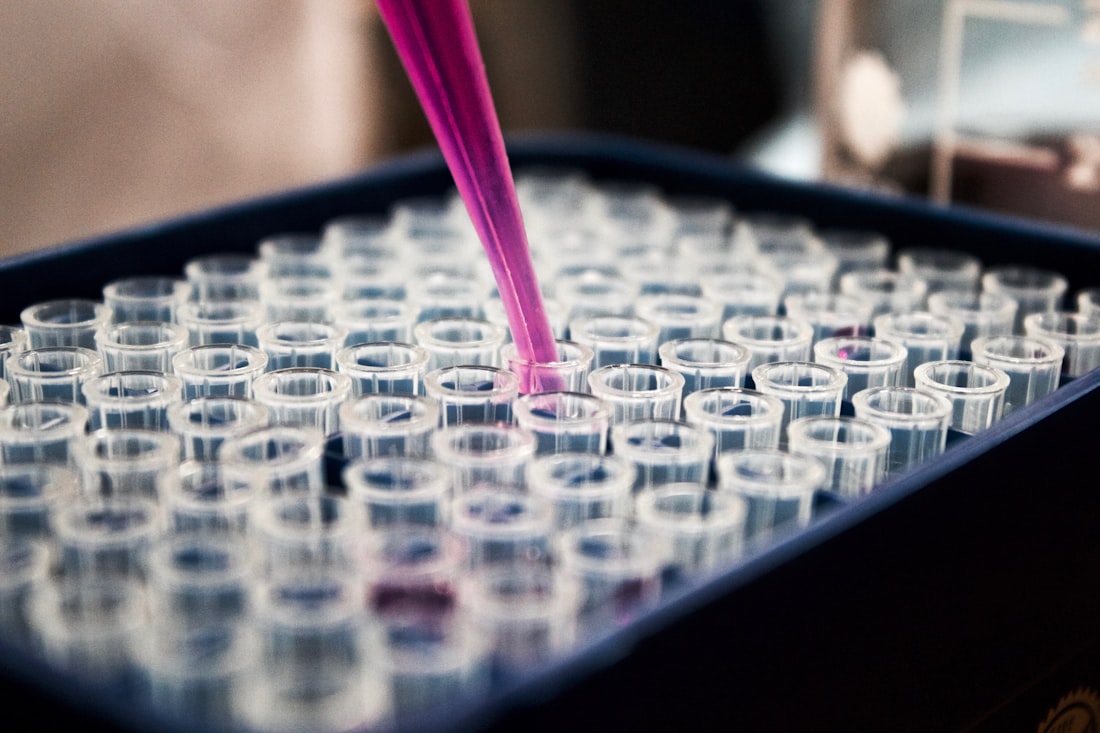
Recruiting the right patients for a clinical trial has historically been one of the slowest, most expensive steps in developing a new medicine.
Where Exactly Does AI Speed Up Medicine Development?
The single biggest documented bottleneck in bringing a new medicine to patients is not designing the molecule, it is clinical trial recruitment. Roughly 80% of trials miss their original enrollment deadlines, and manual patient-trial matching, research coordinators combing through medical records by hand, has historically been the reason why. AI-powered patient matching platforms now scan electronic health records automatically, comparing patient biomarkers and clinical details against trial eligibility criteria far faster and more precisely than manual review ever could.
The reported results are striking. One platform demonstrated a 170-times speed improvement in patient recruitment at Cleveland Clinic, across oncology, cardiology, and neurology trials. A broader 2026 industry analysis found top pharmaceutical companies using AI-powered patient identification recruiting three times faster than companies relying on traditional methods alone, with 40% fewer screen failures, cases where a recruited patient turns out not to actually qualify once fully reviewed.
What Is Happening Technically Behind These Numbers?

AI can scan electronic health records to flag patients who might qualify for a specific trial, work that used to require manual chart review.
AI patient-matching systems typically use natural language processing to read both structured data, like lab values and diagnosis codes, and unstructured data, like a physician's free-text clinical notes, which contain crucial detail that structured fields alone miss. A peer-reviewed 2026 study of one such tool, tested on a colorectal cancer trial, found it achieved 94% retrospective and 88% prospective accuracy matching a gold-standard clinical chart review, with 100% sensitivity, meaning it did not miss any patient who genuinely qualified, while cutting chart review workload by a factor of ten.
A separate research system called TrialGPT reported recalling over 90% of relevant trials for a given patient while screening out more than 94% of clearly irrelevant candidates, and reduced manual screening time by 42.6% in a user study. These are not marketing claims alone, they come from peer-reviewed and independently published research, a distinction worth noting given how much AI health marketing throughout this series has turned out to rest on thinner evidence.
Why Does Oncology Get So Much Attention Here?
Cancer clinical trials illustrate the recruitment problem in its most acute form. Overall estimated patient participation in oncology clinical trials is only around 5 to 7%, despite an exponentially growing number of open studies, largely because eligibility criteria change frequently and matching a specific patient's tumor biomarkers and stage to the right trial by hand is genuinely difficult, specialized work. AI-powered matching platforms can run this prescreening continuously, in the words of one Tempus AI medical director, "accounting for the most recent clinical information about a patient and trial inclusion and exclusion criteria" automatically, rather than waiting for a coordinator's next manual review cycle.
This is a good example of AI's general strength throughout this whole guide series: not making a judgment call a human could not make, but doing continuous, tireless, large-scale comparison work that no human team has the hours to do manually at the same pace and consistency.
Does AI Also Help Address Clinical Trial Diversity?
This is one of the more promising secondary benefits researchers point to. Historically, clinical trials have struggled to enroll diverse patient populations, which limits how confidently results generalize to everyone who might eventually take the approved medicine. AI-powered site selection tools, like the DocTr system published in a 2026 Nature Health paper, work by matching clinicians to trials based on their patient population's characteristics rather than only screening individual patients, aiming to improve both enrollment success and population diversity at the same time.
Whether this translates into meaningfully more diverse trial populations at scale across the industry, rather than in specific well-funded pilot programs, is still an open, actively studied question, but it represents a genuinely different kind of benefit than pure recruitment speed, addressing a scientific validity problem alongside an efficiency one.
Has This Technology Always Worked as Well as the Best Numbers Suggest?
| Case | Reported result |
|---|---|
| Cleveland Clinic AI matching platform | 170x recruitment speed improvement across three specialties |
| One AI patient-matching platform, general reports | 65% improvement in enrollment rates |
| TrialGPT (research system) | 90%+ recall, 94%+ irrelevant-candidate filtering, 42.6% less manual screening time |
| CTPM tool, colorectal cancer trial (peer-reviewed) | 94% retrospective / 88% prospective accuracy, 100% sensitivity |
| Two academic centers piloting IBM Watson-based matching | Reported sharply divergent results between the two sites |
That last row is an important caution. Two academic medical centers running comparable IBM Watson-based clinical trial matching pilots in the same period reportedly saw meaningfully different results, a reminder that implementation quality, data infrastructure, and institutional context can matter as much as the underlying AI technology itself. A tool that performs brilliantly at one site is not guaranteed to replicate that performance everywhere.
Could This Affect Whether You Get Access to a Trial?

Faster, more precise recruitment means research teams spend more time on qualified candidates and less on manual screening.
Potentially, in a genuinely positive way. If your medical records match the eligibility criteria for a relevant trial, an AI matching system at a hospital using one of these tools may flag you as a candidate faster and more reliably than the older process of a coordinator or your own physician happening to remember a specific open trial that fits your situation. Patient-facing platforms like Antidote also let people search and self-match against thousands of trials directly, rather than depending entirely on their care team's awareness of what is currently open.
None of this changes what happens once you are matched to a trial, informed consent, safety monitoring, and the actual clinical evaluation of the drug remain exactly as rigorous and human-supervised as always. AI here speeds up finding the right match, not the trial's scientific or ethical process itself.
What Other Trial Stages Is AI Touching?
Recruitment gets the most attention because it is the most severe historical bottleneck, but AI is increasingly involved in other trial stages too: real-time safety monitoring that flags adverse events faster than periodic manual review, digital biomarkers extracted from wearable or imaging data that can supplement traditional clinical endpoints, and even protocol design tools that pre-validate whether a proposed trial's eligibility criteria are realistic given the actual available patient population before a single site is activated.
One industry report cites 90% sensitivity for AI-based digital biomarkers in detecting adverse events, alongside the recruitment figures covered above, suggesting the technology's reach within a single trial extends well beyond simply finding participants faster.
The Single Takeaway Worth Remembering
If a new medicine reaches you faster than it might have a decade ago, there is a real chance AI-powered patient matching played a role somewhere upstream in that process, not by inventing the drug itself, but by getting the right patients into the right trial faster than a manual chart review ever could. That is a quieter, less headline-grabbing story than AI designing molecules, but the recruitment bottleneck it addresses has historically delayed more medicines from reaching approval than nearly any other single step in the entire development pipeline. For the molecule-design side of that same pipeline, see our drug discovery guide, and for the broader research toolkit this fits into, our AI-assisted medical research guide rounds out the picture.
Frequently Asked Questions
How much faster is AI making clinical trial recruitment?
Reported figures vary by platform and setting, from a 170-times speed improvement at one hospital to industry-wide reports of roughly 3 times faster recruitment with 40% fewer screen failures for top pharmaceutical companies using AI matching in 2026.
Does AI replace clinical research coordinators?
No. AI automates the initial screening and matching work, but coordinators still verify eligibility, obtain informed consent, and manage the actual trial relationship with each participant.
Why is cancer research a major focus for this technology?
Oncology trials face a particularly severe recruitment challenge, with only about 5 to 7% of eligible patients participating, driven partly by how frequently trial eligibility criteria and available studies change, a problem AI's continuous automated matching is well suited to address.
Is AI clinical trial matching proven to work reliably everywhere?
Results are strong in several peer-reviewed studies and vendor case studies, but not universal. Reports of academic centers seeing sharply divergent results with comparable tools show that implementation and institutional context matter alongside the underlying technology.
More AI & Health Guides, Written Clearly
Browse our full library of AI and health explainers, updated as the tools and evidence change.
More from the creator
Explore two other projects from the same creator.