How Smartwatches Use AI to Monitor Health
"AI-powered health monitoring" is printed on the box of nearly every smartwatch sold today, but the phrase covers a specific, layered technical process most owners never see. This guide walks through that process end to end, from the sensor on your wrist to the alert on your screen, so you understand what is actually happening every time your watch buzzes about your heart.
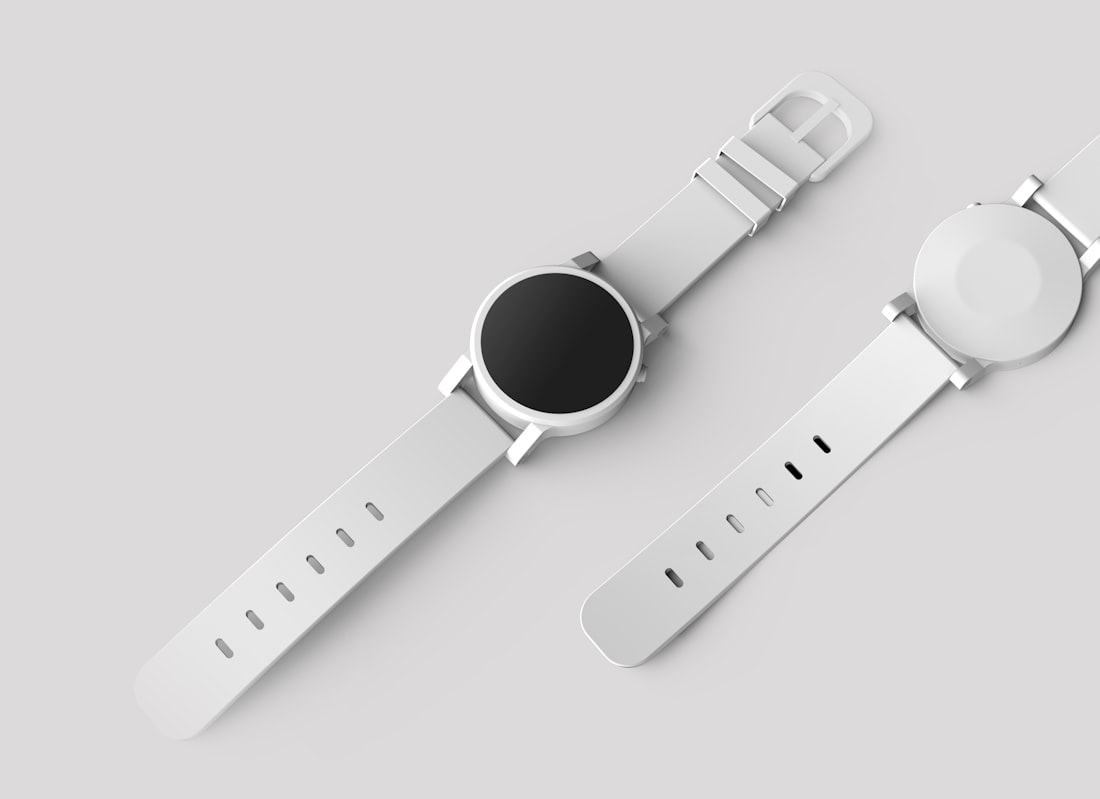
A smartwatch's screen shows the finished output of a chain of sensor readings and AI processing.
What Is the Actual Chain From Sensor to Screen?
Four steps, roughly. First, sensors capture raw physical signals: an optical sensor shines light into your skin and measures how much bounces back as blood flows underneath, while an electrical sensor measures tiny voltage changes when you touch a second electrode. Second, signal processing cleans that raw data, filtering out noise from movement, ambient light, or a loose strap. Third, a trained AI model interprets the cleaned signal, this is where machine learning turns a wave pattern into "72 beats per minute" or "irregular rhythm detected." Fourth, the result is delivered to you, sometimes instantly on the watch itself, sometimes after further processing on your paired phone.
That third step, the AI interpretation, is where most of the actual intelligence lives, and it is trained the same way any medical AI model is: on large datasets where the wearable's sensor readings are matched against a clinical gold standard, like an actual ECG or a sleep lab study, so the model learns to map its imperfect signal to the correct real-world answer.
How Does the Green-Light Sensor Actually Work?

Raw signals from a wearable sensor look nothing like the clean numbers eventually displayed.
Nearly every smartwatch has a cluster of green LEDs on its underside, paired with light-sensitive photodiodes. Blood absorbs green light differently depending on how much is flowing through the capillaries at any instant, so as your heart beats, the amount of light reflected back to the sensor rises and falls in sync. This technique, photoplethysmography, is decades old in clinical medicine and has been miniaturized into consumer wearables over roughly the past ten years.
The raw PPG signal is noisy, heavily affected by motion, skin tone, tattoo ink, strap tightness, and ambient temperature. This is exactly where AI earns its keep: modern wearables use trained models specifically to filter out motion artifacts and other interference, which is a large part of why PPG-based heart rate accuracy has improved so much over the past several device generations even though the underlying sensor technology has not fundamentally changed.
How Is the ECG Feature Different?
An ECG sensor works completely differently. It measures the actual electrical activity of your heart directly, the same underlying signal a hospital ECG machine reads, by completing a tiny circuit between two electrodes, typically the watch back touching your wrist and a second electrode you touch with your other hand. This produces a genuine single-lead electrocardiogram waveform, not an estimate derived from blood flow.
That is why ECG-based AFib detection consistently outperforms PPG-based irregular rhythm notifications in published studies, 98.3% sensitivity for the ECG classification in Apple's original FDA study versus a much lower sensitivity for the always-on PPG-based notification feature alone. The tradeoff: ECG requires you to actively hold still and touch the crown for about 30 seconds, so it cannot run continuously in the background the way PPG monitoring does.
Why Do New Watches Sometimes Feel More Accurate Than Older Ones?
Manufacturers continuously retrain and refine their AI models with newer software updates, often improving accuracy on existing hardware without you buying a new device at all. This is meaningfully different from most traditional medical devices, which typically require a whole new hardware cycle and a new regulatory clearance to improve. A watch's AI model can, and often does, get measurably better at interpreting the exact same sensor over its lifespan through software updates alone.
This also means comparing "smartwatch accuracy" as a fixed, permanent number is somewhat misleading. The specific software version matters, not just the sensor hardware generation, which is one more reason to trust independently published, dated validation studies over general brand reputation.
Where Does the AI Model Actually Run?

Alerts and notifications are the final, user-facing step of a much longer processing pipeline.
Increasingly, on the watch or the paired phone itself, rather than in the cloud, for two practical reasons: speed and privacy. A heart rhythm alert that requires a round trip to a distant server before displaying would be too slow to feel responsive, and continuously streaming raw sensor data off the device would raise obvious privacy concerns. Most mainstream wearable health AI models are specifically optimized to run efficiently on the limited processing power available in a small, battery-constrained device.
This is conceptually the same tradeoff we cover in our broader on-device versus cloud AI guide: local processing trades some model sophistication for speed, privacy, and independence from a network connection, exactly the priorities a wrist-worn health device needs to get right.
How Does AI Efficiency Affect Battery Life?
Running AI models continuously, especially for always-on background monitoring like the irregular rhythm notification feature, is a real battery cost, which is why so much engineering effort goes into making these models as efficient as possible on constrained hardware. This is a smaller-scale version of the same challenge covered in our NPU explainer for phones and laptops, dedicated, efficient chips built specifically to run these smaller AI workloads without draining a battery that already has to last a full day or more on a tiny watch-sized cell.
This is also part of why background PPG monitoring checks periodically rather than truly continuously, and why an on-demand ECG reading requires you to actively initiate it rather than running constantly. Battery constraints are not just an inconvenience, they directly shape which health monitoring features can realistically run in the background versus which have to be something you deliberately trigger.
What Is Changing About Wearable Health AI Right Now?
Two clear trends. First, sensor fusion, combining PPG, ECG, temperature, and motion data together in a single model, rather than analyzing each signal in isolation, tends to produce more accurate results than any single sensor alone, since each sensor's weaknesses can be partially offset by another's strengths. Second, a growing body of large-scale randomized clinical trials, like the 2026 EQUAL trial finding four times more AFib diagnoses in smartwatch wearers, is giving regulators and clinicians much stronger evidence than the marketing claims that dominated earlier device generations.
For the specific evidence behind heart-related detection claims across major wearable brands, see our dedicated heart-detection guide.
Is There an Easy Way to Picture This Whole Pipeline?
Think of your wrist sensor as a microphone picking up a noisy recording of a conversation in a crowded room, that is the raw PPG or ECG signal, full of interference and irrelevant noise mixed in with the actual thing you care about. The AI model is a skilled transcriber who has listened to millions of similarly noisy recordings paired with a clean, verified transcript, and has learned to filter out the crowd noise and produce an accurate transcription even from an imperfect recording.
The transcriber gets it right most of the time, better in some conditions than others, and occasionally still mishears something. That imperfect-but-genuinely-skilled transcriber is a fair mental model for what every AI health feature on your watch is actually doing every time it shows you a number.
Frequently Asked Questions
How does a smartwatch measure heart rate without wires?
It uses an optical sensor, usually green LEDs and photodiodes, that measures how blood flow under your skin changes the amount of reflected light, then an AI model filters out noise and motion artifacts to calculate your heart rate from that signal.
Is a smartwatch ECG the same as a hospital ECG?
It measures the same underlying electrical signal but through a single lead rather than the 12 leads a hospital ECG uses, giving a narrower but still clinically meaningful view, sufficient for detecting certain rhythm abnormalities like AFib.
Does the AI on my watch run locally or in the cloud?
Most core health processing now runs on the watch or your paired phone for speed and privacy, with cloud processing typically reserved for longer-term trend analysis or features that need more computing power.
Why is ECG-based AFib detection more accurate than the background notification?
ECG measures your heart's actual electrical signal directly, while the background irregular rhythm notification estimates rhythm from optical blood-flow data, which is inherently less precise for detecting brief or subtle irregularities.
More AI & Health Guides, Written Clearly
Browse our full library of AI and health explainers, updated as the tools and evidence change.
More from the creator
Explore two other projects from the same creator.