Why Does Claude Keep Going Down? What the 2026 Data Actually Shows
If it feels like Claude has been down more often lately, you're not imagining it. Independent tracking puts Anthropic's platform at the center of a broader industry pattern — AI services scaling faster than their own reliability engineering can keep up. Here's what the actual data shows, what Anthropic has and hasn't said about it, and what you can do to keep your own work from getting caught in the next one.

Anthropic's own status page has become a frequently visited destination for developers checking whether an issue is on their end or the platform's.
A Real Pattern, Not Just a Bad Week
Claude has had a genuinely rough run of reliability in 2026. Independent analytics firm Ookla, which owns Downdetector, analyzed 471 days of U.S. outage-report data from January 2025 through April 2026 and found that major AI-platform disruption days jumped from just six in Q1 2025 to 51 in Q1 2026 — an eightfold increase across the industry. Of those 51 high-signal days, Claude alone accounted for 39, far ahead of Gemini's seven, Copilot's three, and ChatGPT's two.
Ookla's read on why: Claude is "the clearest example of scale-up volatility," where rapid adoption and infrastructure scaling outpace reliability engineering, rather than one persistent bug. Claude had near-zero Downdetector report volume in early 2025, then developed a sustained baseline of complaints as adoption grew through the year — the trade-off, in other words, of going from a niche tool to something millions of people build real workflows around.
What's Actually Been Happening
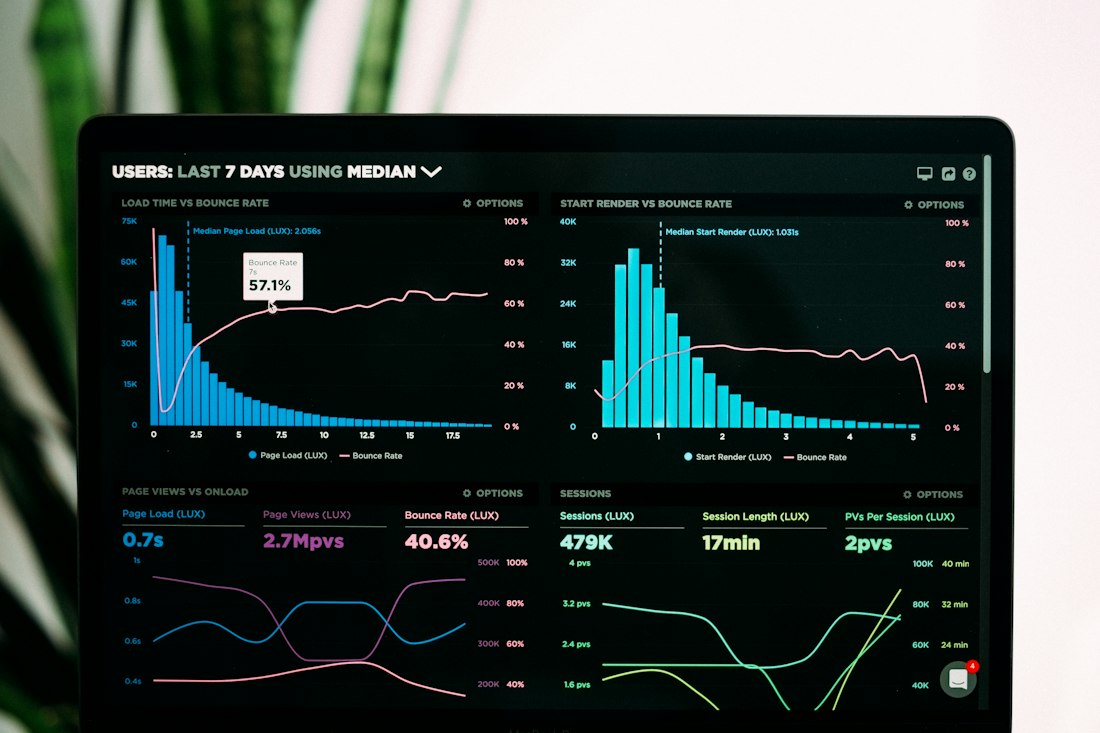
Anthropic's status updates typically confirm that a cause has been identified without publishing what it was — a pattern that shows up across nearly every 2026 incident.
August 2026 alone saw a striking cluster: incidents on August 5, 6, 7, 14, 16, 18, 19, 20, and 24, several affecting overlapping sets of models including Claude Mythos 5, Fable 5, Opus 5, Sonnet 5, and Haiku 4.5. The August 24 incident, for example, began at 05:06 UTC with elevated errors, had a cause identified by 05:27 UTC, and stretched past 06:42 UTC before resolution — a pattern of "cause identified" without a published technical explanation that recurs across nearly every incident this year. Anthropic's own status updates rarely disclose the underlying fault, though the company has confirmed some incidents traced to authentication-layer failures, since claude.ai, the API, Claude Code, and Cowork all sit behind shared authentication infrastructure even though they're otherwise independent services.
Early 2026 disruption
Anthropic reports Claude going down amid what it describes as "unprecedented demand," with nearly 2,000 Downdetector reports at the outage's peak.
Sub-agent bug
A widespread outage traces to a bug in Claude Code's sub-agent system, where sub-agents multiplied exponentially and ran in an infinite loop, hitting the web app, API, and Claude Code simultaneously.
529 errors return
Elevated errors break requests across the web app, API, and dependent tools, with Anthropic confirming the fault without disclosing its cause.
Authentication failure
A roughly 36-minute outage hits claude.ai, Claude Code, the API, and Cowork simultaneously — consistent with a shared authentication layer failing across otherwise independent services.
Multi-model outage
Elevated errors hit Mythos 5, Fable 5, Opus 5, and Opus 4.8 for roughly three hours, generating over 1,300 US outage reports according to Downdetector.
This Isn't Just a Claude Problem
It's worth being fair to Anthropic here: the broader Ookla data shows every major AI platform has had significant reliability issues in 2026, and a meaningful share of AI downtime traces back to cloud infrastructure rather than any model provider's own code. AWS's October 2025 DynamoDB DNS incident generated more than 315,000 US outage reports on its own, and Microsoft's Azure Front Door incident the same month produced nearly 96,000 — a reminder that when a cloud control plane fails, it can cascade into AI platform disruptions that have nothing to do with the AI company's own reliability engineering.
What makes Claude's numbers stand out is less that it's uniquely unreliable and more that its user base has scaled unusually fast in 2026, and Downdetector-style report volume tracks both actual downtime and how many people are using — and complaining about — a service at all. A low report count doesn't automatically mean excellent reliability; it can just as easily mean a smaller or less habituated user base that hasn't built daily workflows around the tool yet.
How to Protect Your Workflow
- Check status.claude.com before assuming the problem is on your end
- For urgent work, switch models temporarily — Sonnet 5 and Haiku 4.5 aren't always affected by incidents hitting Opus or Mythos
- A "529 Overloaded" error is usually a temporary server-side capacity issue, not something to debug locally
- Avoid hardcoding a single model or provider into business-critical automation
- Route through a gateway or abstraction layer that supports automatic failover to a secondary model
- Keep a manual fallback process for anything genuinely time-sensitive
- Treat AI dependency the way you'd treat any other infrastructure vendor — with a real contingency plan, not just hope
Frequently Asked Questions
Why does Claude keep going down?
Anthropic has not disclosed a single root cause. Independent tracking firm Ookla found Claude accounted for 39 of 51 high-signal AI-platform disruption days industry-wide in Q1 2026 alone, describing it as a clear example of scale-up volatility — rapid adoption and infrastructure scaling outpacing reliability engineering, rather than one recurring bug.
Is Claude less reliable than ChatGPT or Gemini?
By Downdetector-based disruption-day counts in early 2026, yes — Claude had significantly more high-signal disruption days than Gemini or Copilot in the same period, while ChatGPT's reliability trend was improving. That said, report volume also reflects usage scale and reporting behavior, not a universal reliability ranking, and all major AI platforms have had significant outages.
How can I protect my workflow from Claude outages?
Avoid hardcoding a single model or provider into critical workflows. Common approaches include routing through an AI gateway that supports automatic failover to a secondary model, checking status.claude.com before assuming a personal issue, and keeping a fallback plan (a different model, or a manual process) for anything genuinely time-sensitive.
More AI Explainers, Written Clearly
Browse our full library of AI guides, updated as the industry changes.
More from the creator
Explore two other projects from the same creator.